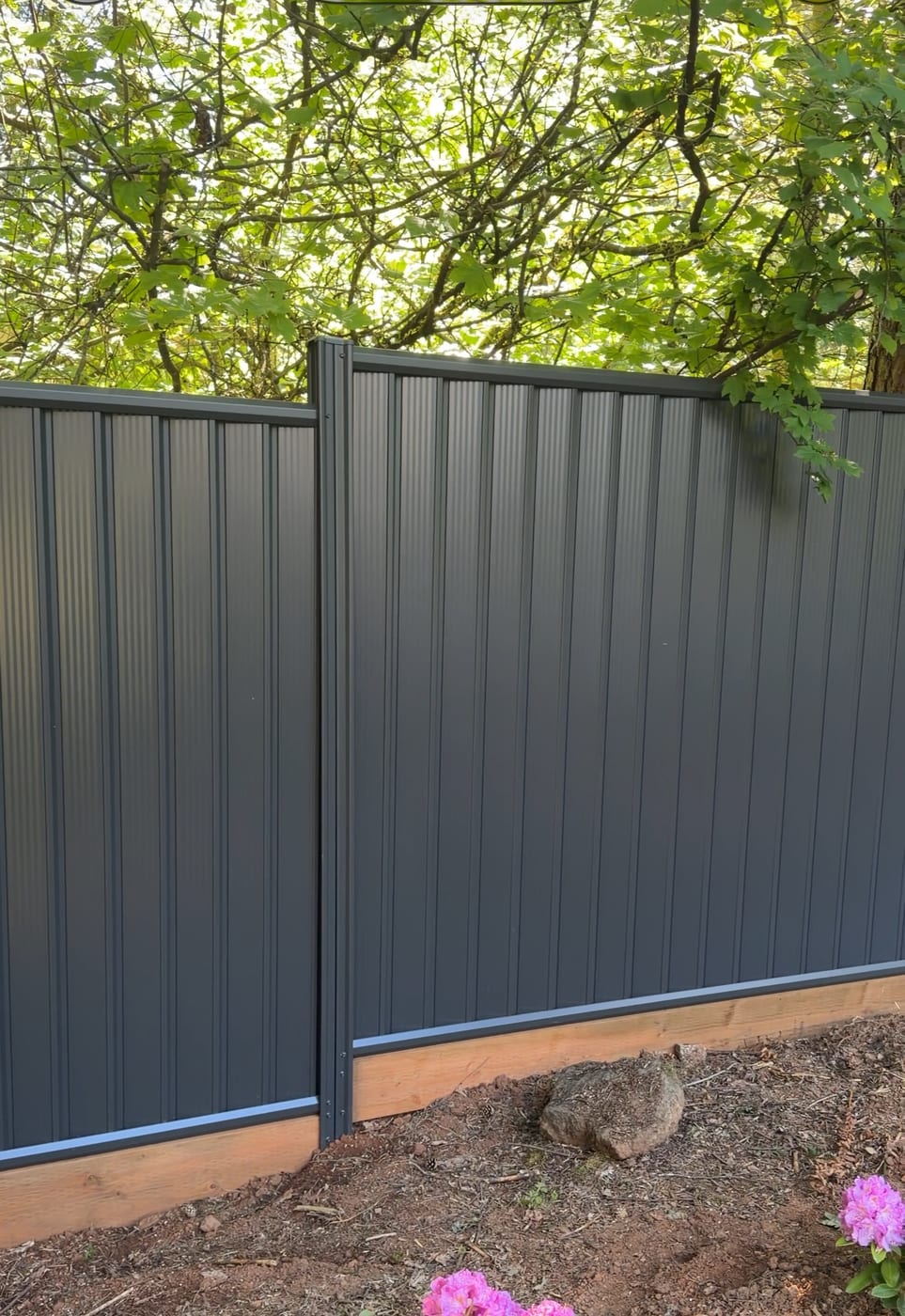
A corrugated metal fence is a fence built from wavy steel panels set into a frame, usually galvanized steel, finished in a factory color or left to weather. The panels do not rot, do not need staining or repainting, and are commonly cited as lasting 40 to 60 years. That is the whole appeal: a clean, modern boundary that you build once and then mostly leave alone.
We build these around Portland and Vancouver, and most people do not realize it, because the product is usually sold under a brand name rather than the words homeowners actually search. If you want the full range of what we install, start with our fence installation page. Below is what the panels really are, the styles worth considering, and how they behave in Northwest weather.
What Is a Corrugated Metal Fence?
It is a panel fence. Sheets of corrugated steel, the same wavy profile you see on agricultural roofing, are cut to height and held in a frame made of posts and rails. The corrugation is not decoration. Folding a flat sheet into waves is what makes a thin panel rigid enough to span between posts without oil-canning or flexing in wind.
That is the difference between a corrugated panel and a flat metal sheet. The waves add stiffness across the short direction, so the panel holds its shape using much less material than a flat sheet of the same span would need.
Corrugated Metal Fence Panels: What They Are Made Of
Almost all residential corrugated metal fence panels are galvanized steel. Galvanizing means the steel is coated in zinc, and the zinc corrodes in place of the steel underneath. That is the entire reason a thin steel panel can sit outside in Oregon rain for decades.
- Galvanized steel, plain finish. The familiar silver look. The zinc layer does the protecting.
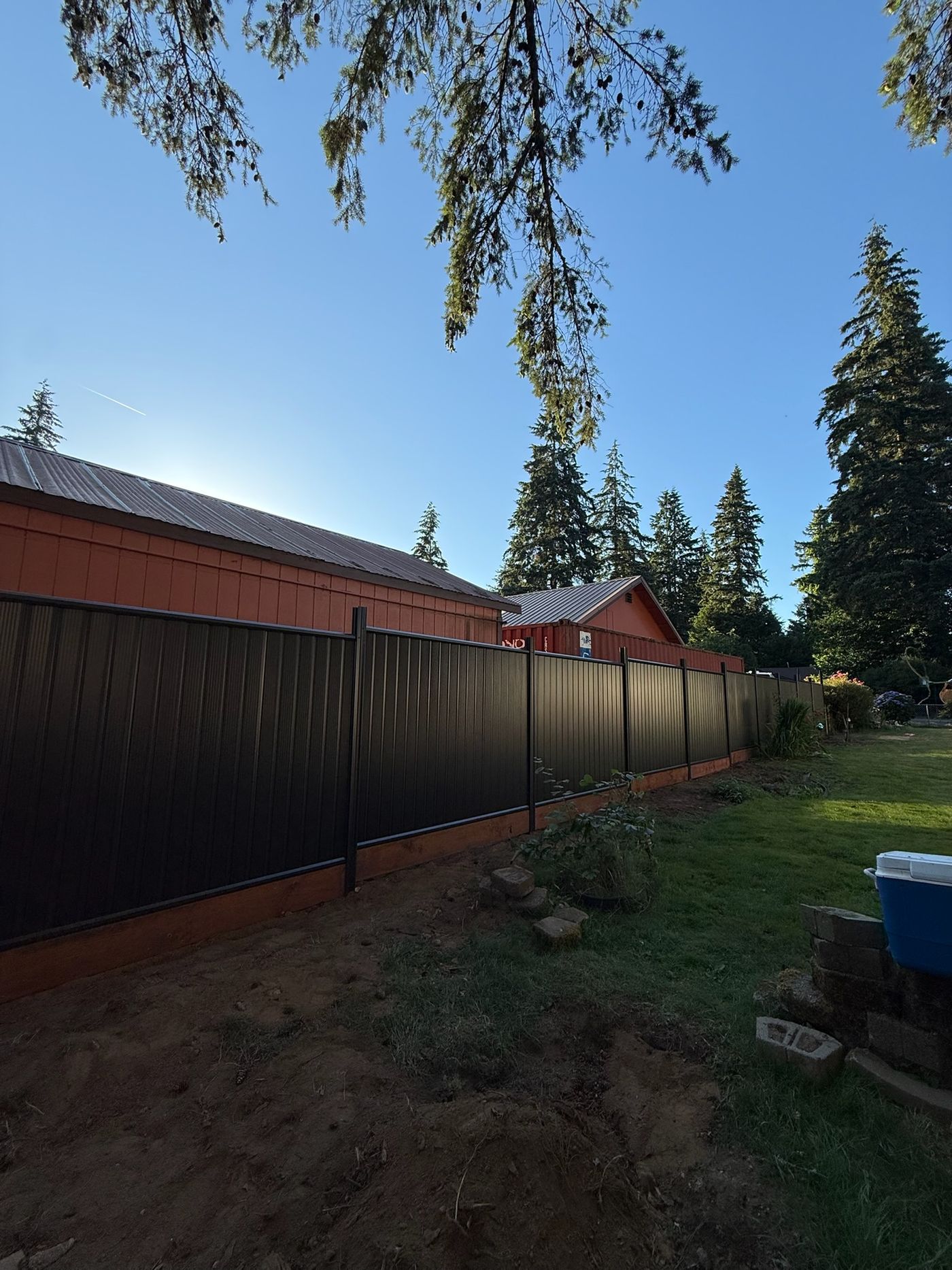
- Coated steel, factory color. A metal-coated panel with a factory paint finish. This is what we install: Colorbond steel, which has a zinc-aluminum coating under the paint, because the color goes on under factory conditions rather than being painted on site.
- Weathering steel, often called Corten. Designed to form a stable rust layer that then protects the metal beneath it. It is a deliberate look, not a failure, but it does stain whatever sits below it during the first year or two.
- Aluminum. Lighter and it will not rust, but it dents more easily than steel.
Panel thickness is quoted as a gauge number, and confusingly the number gets bigger as the steel gets thinner. Published guidance for fence panels ranges from about 26 to 29 gauge depending on the supplier, so it is worth asking what you are actually being quoted rather than assuming.
Metal Fence Types, and Where Corrugated Sits
Metal fencing covers several different products that get lumped together:
| Type | Look | Privacy | Upkeep |
|---|---|---|---|
| Corrugated panel | Modern, solid, architectural | Full | Wash it occasionally |
| Chain link | Utility, see-through | None | Very low |
| Ornamental steel or iron (we do not install) | Traditional, vertical bars | None | Repaint eventually |
| Corrugated with a wood frame | Warm and modern together | Full | The wood needs sealing, the panel does not |
If you want a solid, private, modern-looking boundary in metal, corrugated panel is the one. The others either see through or read traditional.
Horizontal Corrugated Metal Fence or Vertical?
Panels can run either way, and it changes the look more than anything else you will choose.
- Vertical corrugation, meaning the waves run up and down, is the traditional orientation. Water sheds straight down the flutes, which is the practical choice in a wet climate.
- Horizontal corrugation, with the waves running side to side, gives the wide modern look people usually have in mind when they search for a modern corrugated metal fence. It suits flat runs and contemporary houses. On a slope it has to be stepped carefully, panel by panel, or the horizontal lines stop reading as level.
The same logic applies to wood, and we cover the design side of it in our guide to horizontal fence ideas. The orientation decision is mostly aesthetic, but drainage and slope are the two things that make it practical.
Modern Corrugated Metal Fence Ideas That Actually Work
- Panel over a timber base. A run of corrugated steel above a cedar kickboard. The wood grounds the fence visually and takes the abuse at ground level, where a metal panel would otherwise sit in wet soil.
- Mixed bays. Alternating corrugated panels with cedar sections, so the fence reads warm from the house side and modern from the street.
- Color matched to the trim. A factory color picked off the house trim rather than a default silver makes the fence read as part of the building instead of a boundary bolted on afterwards.
- Full-height panels for a side yard. Where you want real privacy and there is no room for a planted screen, a solid metal panel does in one plane what a hedge takes years to do.
How Corrugated Metal Holds Up in the Pacific Northwest
Our climate is hard on fences in a specific way. It is not extreme cold or heat here, it is months of damp. That is what rots a wood post at the soil line and grows moss on a north-facing panel.
Steel panels sidestep most of that. They do not rot, they do not feed insects, and they will not absorb water and swell. Published guidance puts corrugated panel life at roughly 40 to 60 years, which is well beyond what a stained wood fence will give you in this climate.
The part that does need attention is the bottom. Steel sitting directly in wet soil is the one condition that shortens a metal fence, because the zinc gets consumed fastest where the panel stays wet. Keeping the panel up off the ground is the single most important detail on the whole fence.
How We Build Them
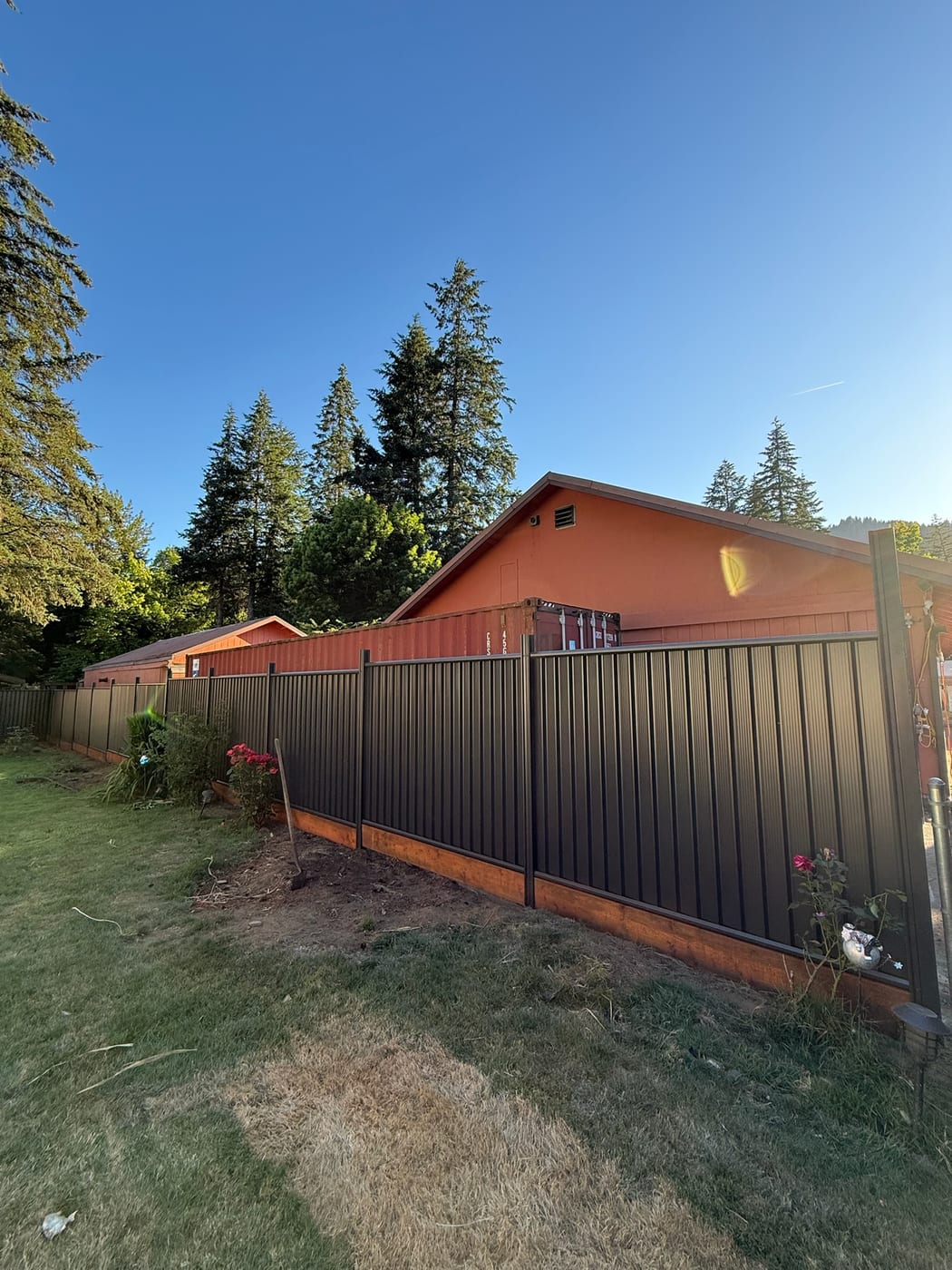
Our metal fences are steel panels set on a cedar kickboard, with the panel edges captured in a post channel, in a range of factory colors. The kickboard is the detail that matters most. It keeps the steel clear of wet ground, it gives the fence a clean line along uneven grade, and it is the part that takes the mower and the weed trimmer instead of the panel.
We use Grade 1 cedar for the timber elements and stainless fasteners throughout, the same standard as our cedar fences, so nothing rusts and bleeds down the face of a panel a year later.
If you are weighing metal against cedar, vinyl or chain link, the comparison table on our Portland fence contractors page lays the four side by side on appearance, privacy, durability and upkeep.
Thinking about a metal fence?
We will walk your property, show you the panel colors in daylight, and give you a written quote with no pressure.
Licensed and insured. CCB #198186 in Oregon, L&I #EXTERDC884PP in Washington.
Frequently Asked Questions
Does a corrugated metal fence rust?
A galvanized panel resists rust because the zinc coating corrodes before the steel does. Weathering steel is different and is meant to develop a rust layer on purpose. The place any metal fence is most likely to corrode is where it sits in wet ground, which is why the panel should be held clear of the soil.
Is a metal fence loud in the rain or wind?
Less than people expect. A panel captured firmly in a channel top and bottom has nowhere to drum or rattle. Noise on a metal fence is almost always a fixing problem rather than a material problem.
Can you put a corrugated metal fence on a slope?
Yes, and it is stepped rather than raked. Each bay sits level and drops to the next at the post, which gives the stair-step line you see on sloped sites. Horizontal corrugation makes those steps more visible, so it is worth deciding the orientation with the slope in mind.
Does it need painting?
No. A factory color coat is applied under controlled conditions and is not something you top up on site. Occasional washing is the whole maintenance routine.
Is corrugated metal private?
Completely. It is a solid panel with no gaps at all, so it gives full visual privacy the day it goes up, unlike a board fence that can shrink and open gaps as it dries.
Sources
- Western States Metal Roofing, Corrugated Metal Fencing Advantages: 40 to 60 year panel life, resistance to rot, mold and insects, and 29 gauge as a suitable fence panel.
- BarrierBoss, The Complete Guide to Corrugated Metal Fence: 26 gauge galvanized panels, the 7/8 inch corrugation profile, zinc coating weights, and clearance above grade.
Gorilla Works proudly serves Portland, Gresham, Beaverton, Hillsboro, Tigard, Lake Oswego, Happy Valley, Milwaukie, Troutdale, Vancouver WA, and Camas WA. Call (971) 343-4964 or request a fence estimate.