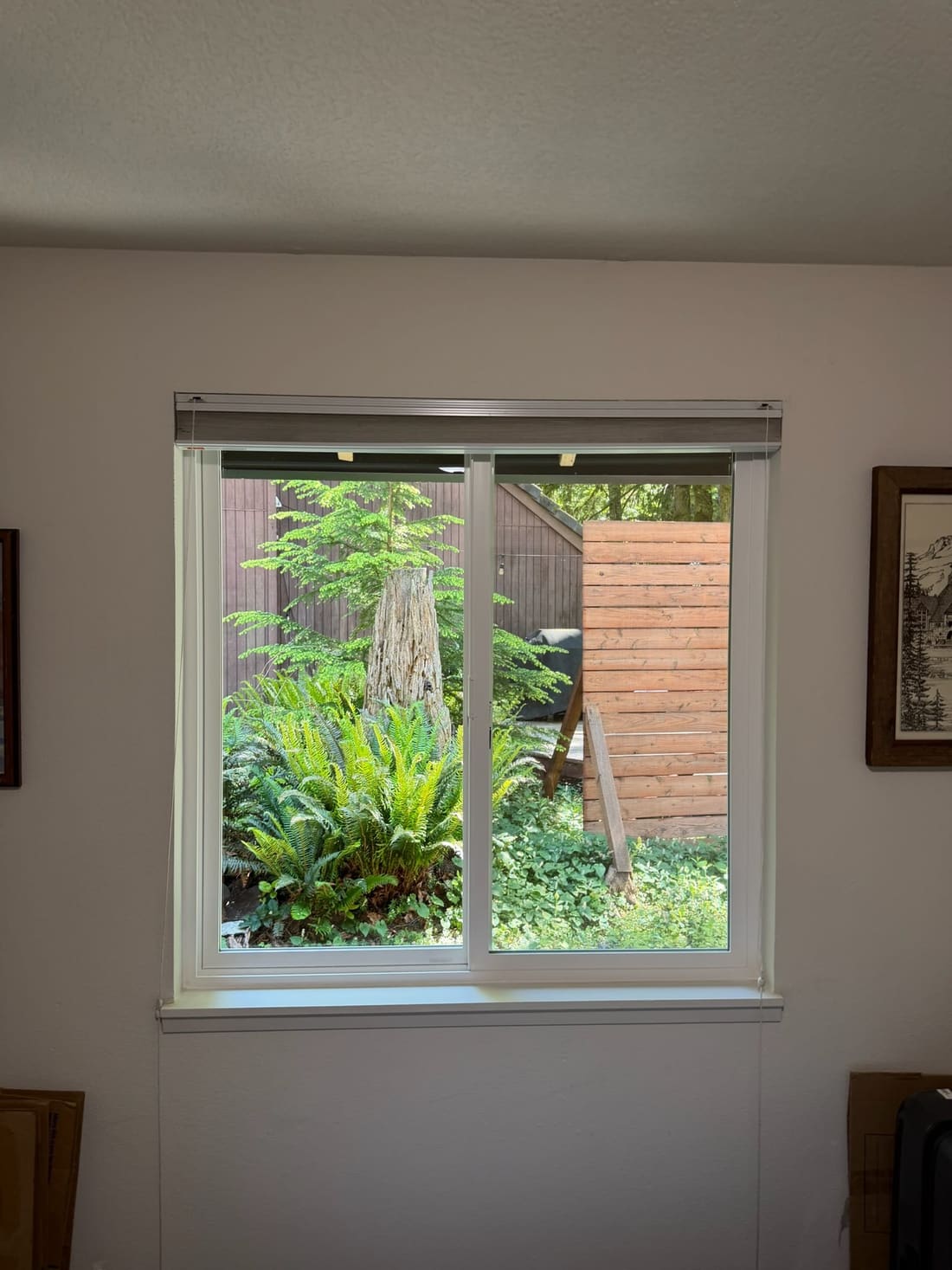
The most energy-efficient windows for the Portland climate are double or triple-pane units with a Low-E coating, an argon gas fill, and a low U-factor, 0.25 or lower under the current ENERGY STAR rules. Those four features, not the brand name, are what actually lower your bill, and they are the spec Gorilla Works installs across Portland and Vancouver WA in Milgard vinyl and fiberglass. Windows are one of the biggest places heat escapes a Northwest home, and replacing old single-pane windows with ENERGY STAR windows can save a typical home about 125 to 465 dollars a year.
Want the right glass package for your home?
Gorilla Works recommends the right glass package for your home and gives you a written quote with no pressure.
Licensed and insured. CCB #198186 in Oregon, L&I #EXTERDC884PP in Washington.
This guide covers the features that matter, how much you can really save, and which rebates actually exist right now. When you are ready, our team handles energy-efficient window installation across the Portland area.
Shopping for new windows rather than researching? Gorilla Works is a Milgard certified installer. We install ENERGY STAR Milgard vinyl and fiberglass windows, from the V300 Trinsic and V400 Tuscany to the C700 fiberglass series, with a Limited Lifetime Warranty on qualifying installs and a free, written estimate. See our energy-efficient window replacement in Portland page, or keep reading for what makes a window efficient.
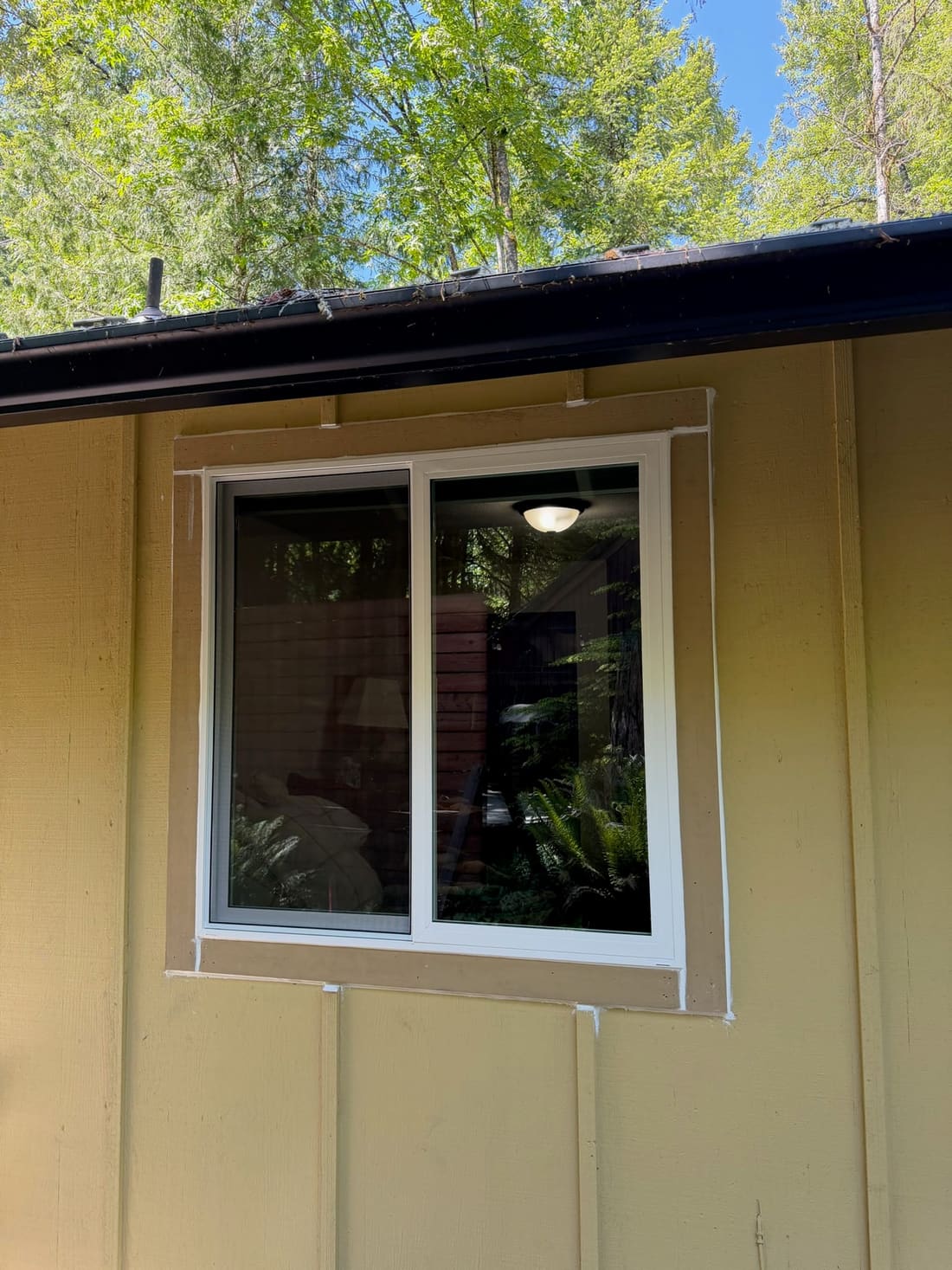
What Makes a Window Energy-Efficient? The 4 Things That Matter
The brand on the sticker matters far less than these four features. Look for all of them:
| Feature | What it does | What to look for |
|---|---|---|
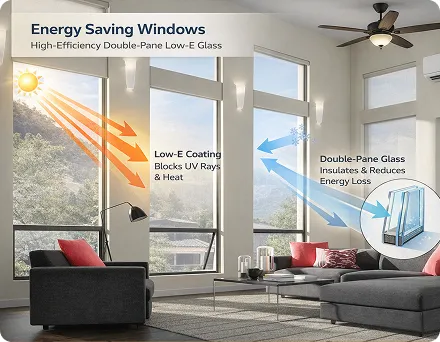
| Low-E coating | Reflects heat back inside in winter and out in summer | A Low-E coating on the glass, standard on ENERGY STAR windows |
| Double or triple pane | The sealed gas gap between panes is the real insulator | Two panes minimum; triple pane for the lowest U-factor and less noise |
| Argon gas fill | Insulates about 30 percent better than plain air | An argon (or krypton) fill between the panes |
| Low U-factor | Measures how well the whole window holds heat in | 0.25 or lower, or 0.22 in the ENERGY STAR Northern zone |
How Much Do Energy-Efficient Windows Actually Save?
The Department of Energy estimates that replacing old single-pane windows with ENERGY STAR windows saves a typical home about 125 to 465 dollars a year, and modern double or triple-pane windows can cut your energy use roughly 7 to 20 percent. The biggest savings come from replacing old single-pane windows or ones with failed seals. If your windows are already decent double-pane units in good shape, the payback is slower, which is an honest thing most window ads will not tell you.
What ENERGY STAR Means Here in Oregon
ENERGY STAR raised the bar with Version 7, in effect since October 2023. A window now needs a U-factor of 0.22 or lower to earn the label in the Northern climate zone (or 0.23 to 0.26 paired with a higher solar heat gain rating), and 0.25 or lower in the North-Central zone. ENERGY STAR assigns zones by county, so check yours with its climate zone finder. The practical move: look for the ENERGY STAR label and the U-factor number on the NFRC sticker. Lower is better.
Are There Rebates for New Windows Around Portland?
This is the part a lot of pages get wrong. Energy Trust of Oregon does run a window incentive, but as of October 2026 its window page limits it to Southwest Washington homes heated by NW Natural gas: 10 dollars per square foot for replacing single-pane windows, or metal-frame double-pane windows, with windows rated U-0.30 or lower, applied for within 60 days of install. The page does not list a window incentive for homes on the Oregon side. Programs change, so check energytrust.org and your utility before you buy.
Get the right windows for your home
We recommend the glass package that fits your home and budget and give you a written quote. Free and no pressure.
Licensed, bonded & insured · Milgard-certified · 20+ years in the Portland area · Flexible financing
The federal tax credit for windows is gone
This one catches people out, because most pages online have not updated. The federal Energy Efficient Home Improvement Credit, the one that let you claim part of the cost of qualifying windows on your taxes, was repealed. It ended for anything installed from the first of January 2026 onward.
If you put qualifying windows in during 2025 or earlier, you can still claim that on the return you file for that year. For a job done now, there is no federal credit to claim. Anyone telling you otherwise is working from an old page.
So for most Portland homes, the payback now comes from the energy savings themselves, plus a utility incentive where one applies.
Are New Windows Worth It?
If your windows are old single-pane, drafty, or fogging from a failed seal, yes. Around Portland we most often see single-pane or early aluminum-framed windows on older homes, and those are the ones where new windows pay off fastest. You are paying for them every month in heat that walks right out, and the energy savings shorten the payback. If your windows are newer double-pane units in good shape, the math is slower and it may not be urgent yet.
Not sure if yours are due? If your windows are fogging up or past their lifespan, replacing them is usually the call.
The Best Windows for the Pacific Northwest
For our wet, cool climate, the efficient standard is a double-pane window with Low-E glass and an argon fill, with a U-factor of 0.25 or lower. Triple pane lowers the U-factor even further and cuts outside noise, which is worth it for large windows or if you plan to stay in the home a long time. The frame matters for stability too.
Both vinyl and fiberglass frames can hit these efficiency numbers, so the choice comes down to budget and how long you plan to stay. As a Milgard-certified installer, we carry ENERGY STAR options in both.
Summer matters here now, not just winter
Almost everything written about windows in Portland is about keeping heat in, and the ENERGY STAR section above is part of that: in our climate zone a bit of free solar heat through the glass genuinely helps in winter. That is true. It is also only half the picture, and the other half shows up in August in a house with no air conditioning.
The number that governs summer is not U-factor
U-factor measures how fast heat escapes, which is a winter question. The summer number is the solar heat gain coefficient, or SHGC. It runs from 0 to 1 and tells you what fraction of the sun's heat comes through the glass. Plain single-pane glass sits around 0.86, so nearly all of it. A double pane with a low-E coating drops to roughly 0.40.
So the two sections are not in conflict, they are the trade-off. Lower SHGC means a cooler room in July and less work for whatever cooling you have. Higher SHGC means free warmth in January, which is why ENERGY STAR does not cap it hard in our zone. In a mixed climate you are balancing the two rather than maximising either, and that is exactly why a blanket recommendation out of a national brochure tends to be wrong for a Portland house.
Which way to lean depends on the wall the window sits in
- West and southwest facing glass takes the worst of the late afternoon summer sun. This is where a lower SHGC earns its keep, and where rooms get unbearable during a heat wave.
- South facing glass is the genuine trade-off. Lower SHGC costs you useful winter warmth, so it is worth thinking about rather than defaulting.
- North facing glass gets very little direct sun either way, so U-factor is the number that matters there and SHGC barely moves the outcome.
- Shade changes everything. A big Doug fir over the west side of the house is doing the same job a coating would, and it is worth accounting for before paying for glass you do not need.
This is the part worth raising with whoever quotes your job. High performance windows are not one specification applied to every opening, and a good installer will talk about orientation before talking about brand.
How Gorilla Works Installs for Efficiency
Here is the part that gets skipped: a high-efficiency window installed poorly still leaks air around the frame, and you lose the savings you paid for. Efficiency is won or lost at the install. Here is how we protect it:
- ENERGY STAR, Milgard-certified windows with Low-E glass and the U-factor that fits your goals.
- A weather-tight install with proper flashing and sealing, so the efficient window actually performs.
- Clean work from a licensed, bonded, and insured local crew, plus flexible financing.
Ready to get energy-efficient windows installed in your Portland home? See our Portland window installation page to get started.
Frequently Asked Questions
What U-factor should windows have in Portland?
Under ENERGY STAR Version 7, aim for 0.25 or lower, and 0.22 or lower if your county falls in the Northern zone. A lower U-factor means the window holds heat in better.
Do energy-efficient windows really lower my bill?
Yes, especially if you are replacing single-pane or failed windows. The Department of Energy estimates about 125 to 465 dollars a year in savings, and roughly 7 to 20 percent off your energy use. If your windows are already good double-pane units, the savings are smaller.
Are there rebates for new windows in Oregon?
Not for most Oregon homes right now. Energy Trust of Oregon's window incentive currently covers Southwest Washington homes heated by NW Natural gas: 10 dollars per square foot for replacing single-pane or metal double-pane windows with U-0.30 or better. Check energytrust.org and your utility for current offers.
Double or triple pane for the Pacific Northwest?
Double-pane with Low-E and argon is the efficient standard and a great value here. Triple pane lowers the U-factor further and cuts noise, which is worth it for large windows or a long-term home.
Does the installation affect efficiency?
A lot. A poorly sealed install leaks air around even the best window, so you lose the savings. Weather-tight flashing and sealing is what locks in the efficiency, which is why the crew matters as much as the window.
Do new windows still qualify for a federal tax credit?
No. The federal credit for windows was repealed and does not apply to anything installed from January 2026 onward. Work done in 2025 or earlier can still be claimed on that year's return. Check your utility for any current incentive.
Will new windows lower my air conditioning bill?
They can, and the mechanism is solar heat gain rather than insulation. Glass with a lower SHGC lets less of the sun's heat into the room, so the space starts cooler and whatever cooling you run has less to fight. The effect is largest on west and southwest facing windows.
What are high performance windows?
It is a loose term rather than a certification. In practice it means a window doing well on both numbers at once, a low U-factor for winter and an SHGC chosen to suit the wall it sits in, usually with a low-E coating and an insulating gas fill. Ask for the actual figures rather than the label.
Double or triple pane for keeping a house cool?
Adding a third pane mostly improves the winter number and the sound. For summer heat the coating and the SHGC do more work than the pane count, so a well specified double pane can outperform a poorly specified triple pane on a hot west wall.
Which windows are the most energy efficient?
For Portland, a double or triple-pane window with Low-E glass, an argon fill, and a U-factor of 0.25 or lower. Triple pane is the most efficient option. The frame material matters less than those four glass features.
What are energy efficient windows?
Windows built to slow heat passing through the glass and frame: two or three panes, a Low-E coating, an inert gas fill between the panes, and a low U-factor. Under ENERGY STAR Version 7, that means a U-factor of 0.22 to 0.25 or lower, depending on your climate zone.
How can I make my existing windows more energy efficient?
Short of replacing them: seal gaps with weatherstripping and caulk, add cellular shades or heavy curtains, and put storm windows over single-pane units. Those cut drafts, but they cannot fix a failed seal or the poor insulation of a single pane. The 125 to 465 dollars a year the Department of Energy cites comes from replacing single-pane windows with ENERGY STAR units.
What windows keep heat and cold out?
Double or triple-pane windows with a Low-E coating and an argon fill. Low-E reflects heat back inside in winter and back outside in summer, and the gas gap slows heat moving either way. On west-facing glass that takes the late afternoon sun, a lower solar heat gain coefficient keeps the room cooler in July.
Will new windows help with my electric bill?
If you heat or cool with electricity, yes. The Department of Energy estimate is 125 to 465 dollars a year when replacing single-pane windows, roughly 7 to 20 percent off energy use. Replacing decent double-pane windows that are still sealed saves less.
Are triple-pane windows worth it in Portland?
For large windows, a noisy street, or a home you plan to keep for many years, yes. Triple pane pushes the U-factor lower and cuts outside noise. For a typical home, double-pane with Low-E and argon is the value pick.
The Bottom Line
The brand matters less than the features: Low-E glass, an argon fill, double or triple pane, and a U-factor of 0.25 or lower. Replace old single-pane windows and seal the install tight, and you stop paying to heat the outdoors.
Sources
- U.S. Department of Energy: Guide to Energy-Efficient Windows
- Energy Trust of Oregon: Window Incentives
- ENERGY STAR Version 7.0 specification for residential windows, doors and skylights (U-factor by climate zone)
- ENERGY STAR: federal tax credits for windows and skylights
- InterNACHI: solar heat gain coefficient ratings for windows
Gorilla Works proudly serves Portland, Gresham, Beaverton, Hillsboro, Tigard, Lake Oswego, Happy Valley, Milwaukie, Troutdale, Vancouver WA, and Camas WA. Call (971) 343-4964 or request window installation.