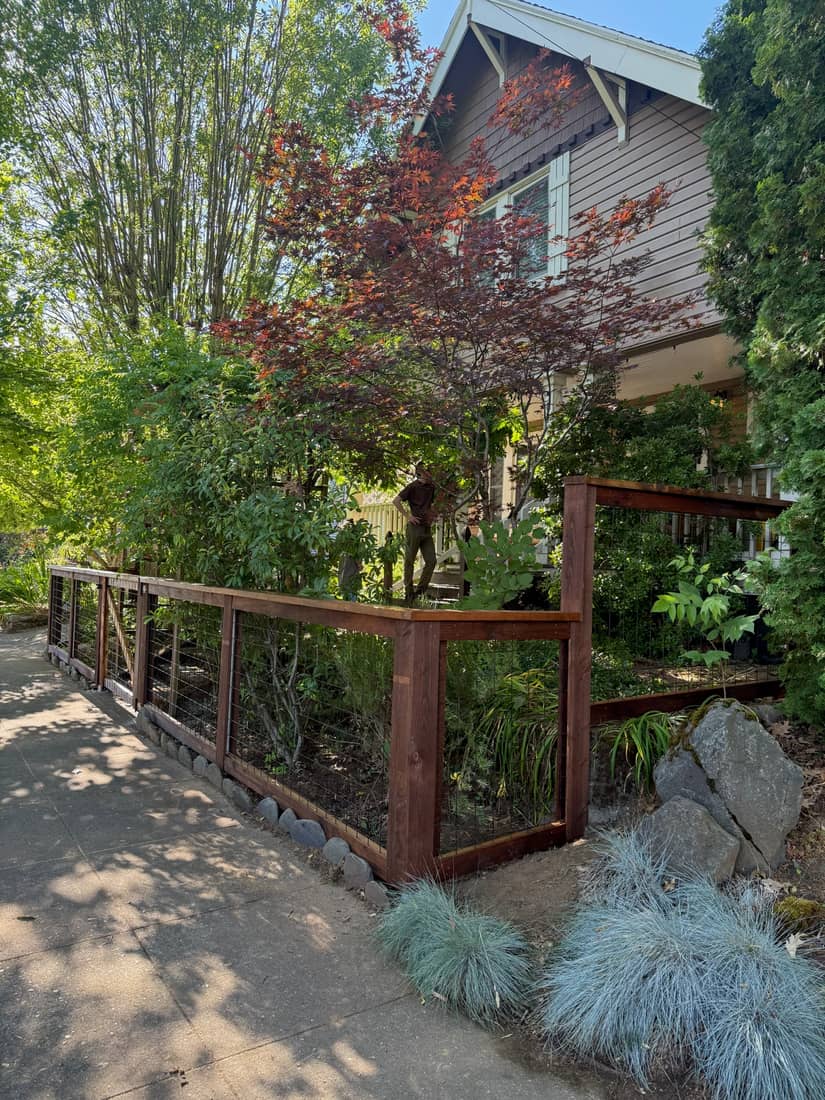
Landscaping along a fence does two jobs: it softens a long, straight run of fence, and it ties the fence into the rest of the yard so it looks built-in instead of dropped in. The trick in the Pacific Northwest is doing it without trapping moisture against the wood or blocking the access you need to keep the fence up. This is a fence builder's take on fence line landscaping: how to plant along your fence and still have the fence last.
Why landscape along a fence at all
A fence is a hard, straight line. Plants soften it and give the eye something to land on. Most fence landscaping ideas come back to a few reasons homeowners plant a fence line:
- Soften a long run of solid fence so it reads as part of the garden.
- Hide a fence that has no looks of its own, like a chain link fence, behind greenery.
- Get a cottage-garden feel with low plantings along a picket or open fence.
- Tie the fence into the rest of the yard by repeating plants you already have nearby.
Plan for all four seasons
The common mistake is planting only for spring. A fence line you look at every day should hold up in winter too. Build a backbone of evergreen shrubs for year-round structure, then layer in seasonal color so there is always something going on. In our climate that means leaning on plants that take a wet winter and a dry late summer, and not leaving the fence bare and gray for the five grayest months of the year.
Match the plant to the spot: sun, water, and the fence microclimate
A fence changes the conditions right next to it, and that decides what will thrive. A solid privacy fence blocks wind and casts shade, so the strip along it is cooler and more sheltered than the open yard. A south or west facing fence can create a warm, dry pocket, while a north facing side stays cool and damp. Group plants by what they need: sun lovers along the sunny exposures, shade plants on the shaded side, and plants with the same water needs together so you are not overwatering one to keep another alive.
Leave the fence room to breathe (the tip most guides skip)
This is the part a fence builder cares about most. Plants hold moisture, and a wood fence lasts longest when air can move around it and when you can still reach it. Two rules:
- Space plants far enough off a wood fence that air moves behind them and you can still get in to maintain the fence. A shrub planted tight against the boards traps damp and shortens the life of the wood.
- Be careful with vines on a wood fence. Vines look great but they hold moisture against the boards and make upkeep hard. Grow them on a freestanding trellis a short distance off the fence, or in containers, or save the climbers for a chain link fence, which they actually help hide. An annual vine is a safer bet on wood than a heavy permanent one.
Pick a fence style that works with your plantings

The fence and the planting plan should be chosen together. A solid cedar privacy fence makes a clean green backdrop for a border. An airier style like good neighbor or a lattice-top lets more light through to the plants right behind it. A modern horizontal fence pairs well with ornamental grasses and simple, structural planting. If you are planning a new fence and a new border at the same time, decide the style with the garden in mind.
See our full guide to the types of fences and cedar styles we build, including the parts of a wood fence and what makes each one last.
Still deciding on a material? Our guide to choosing the right fencing material weighs cedar, chain link and steel for the Portland climate.
Planning a new fence to build your yard around?
We install cedar privacy, good neighbor, horizontal, and more across Portland and Vancouver WA, with Grade 1 or better cedar, stainless fasteners, and posts set for PNW ground.
Licensed, bonded and insured · Grade 1 or better cedar on every cedar fence · Every installer has 5+ years of fence experience
Landscape both sides, and mulch the street side
If your fence has a public side, like a strip between the fence and the sidewalk, do not ignore it. Even a simple two foot bed of mulch along the street side keeps weeds down, saves you running a trimmer along the boards, and makes the whole fence look cared for. On the yard side, a layer of mulch does the same job and helps the bed hold moisture through our dry late summer.
Frequently Asked Questions
What should I plant along a fence line?
Start with evergreen shrubs for year-round structure, then add seasonal color and, where there is room, a small tree or ornamental grass. Pick plants that match the sun and water at that exact spot, and leave space between the plants and a wood fence so air can move and you can maintain the fence.
How far from a fence should you plant?
Plant far enough off a wood fence that air circulates behind the plant and you can still reach the fence to maintain it, and account for how big the plant gets at maturity, not its size today. Planting tight against the boards traps moisture and shortens the life of the wood.
Can I grow vines on a wood fence?
It is risky. Vines hold moisture against the boards and make the fence hard to maintain. Better to grow them on a freestanding trellis set off the fence, or in containers, or on a chain link fence, which vines actually help to hide. If you want a vine on a wood fence, an annual is safer than a heavy permanent climber.
What grows well along a fence in the Pacific Northwest?
Plants that handle a wet winter and a drier late summer and that suit the exposure. Evergreens give winter structure, and shade-tolerant plants do well on the cool, sheltered side of a solid fence. A local nursery can match specific varieties to your soil and sun, which is worth doing before you plant a whole run.
Gorilla Works proudly serves Portland, Gresham, Beaverton, Hillsboro, Tigard, Lake Oswego, Happy Valley, Milwaukie, Troutdale, Vancouver WA, and Camas WA. Call (971) 343-4964 or request a fence quote.