The main types of fences we build around Portland are cedar (in several styles), chain link, and steel. Which one is right for your yard comes down to two things: the look you want to live with, and what the fence is actually built from. The build is the part that decides whether your fence still looks great in 25 years or sags and grays out in 7, and it is the part most companies quietly cut corners on.
We have built fences across the Portland metro for more than 20 years, and over 100 of the fences our team has installed are still standing strong after 20-plus years. Some of that is the style you pick. Most of it is what goes into the fence, which is the part most homeowners never get told about until it fails.
If you already know what you want, we handle fence contracting in Portland, Vancouver, and the surrounding area. If you are still deciding, keep reading.
Cedar Fence Styles, the Northwest Favorite
Cedar is the most popular fence material in the Pacific Northwest, and in our wet climate it earns the spot: it naturally resists rot and insects, it handles soggy winters far better than pine or fir, and it looks warm and natural. The style you choose changes the look, the privacy, and how much of your yard you still get to see.
Standard Cedar (Vertical)
The classic. Vertical cedar boards set side by side for a clean, full-privacy fence. It is the most common style we install, and it fits almost any Portland home, from an older bungalow to a new build.
Horizontal Cedar
The modern look, with boards running side to side for a clean, contemporary feel that suits newer and remodeled homes. We wrote a full guide on horizontal fence ideas if that is the direction you are leaning.
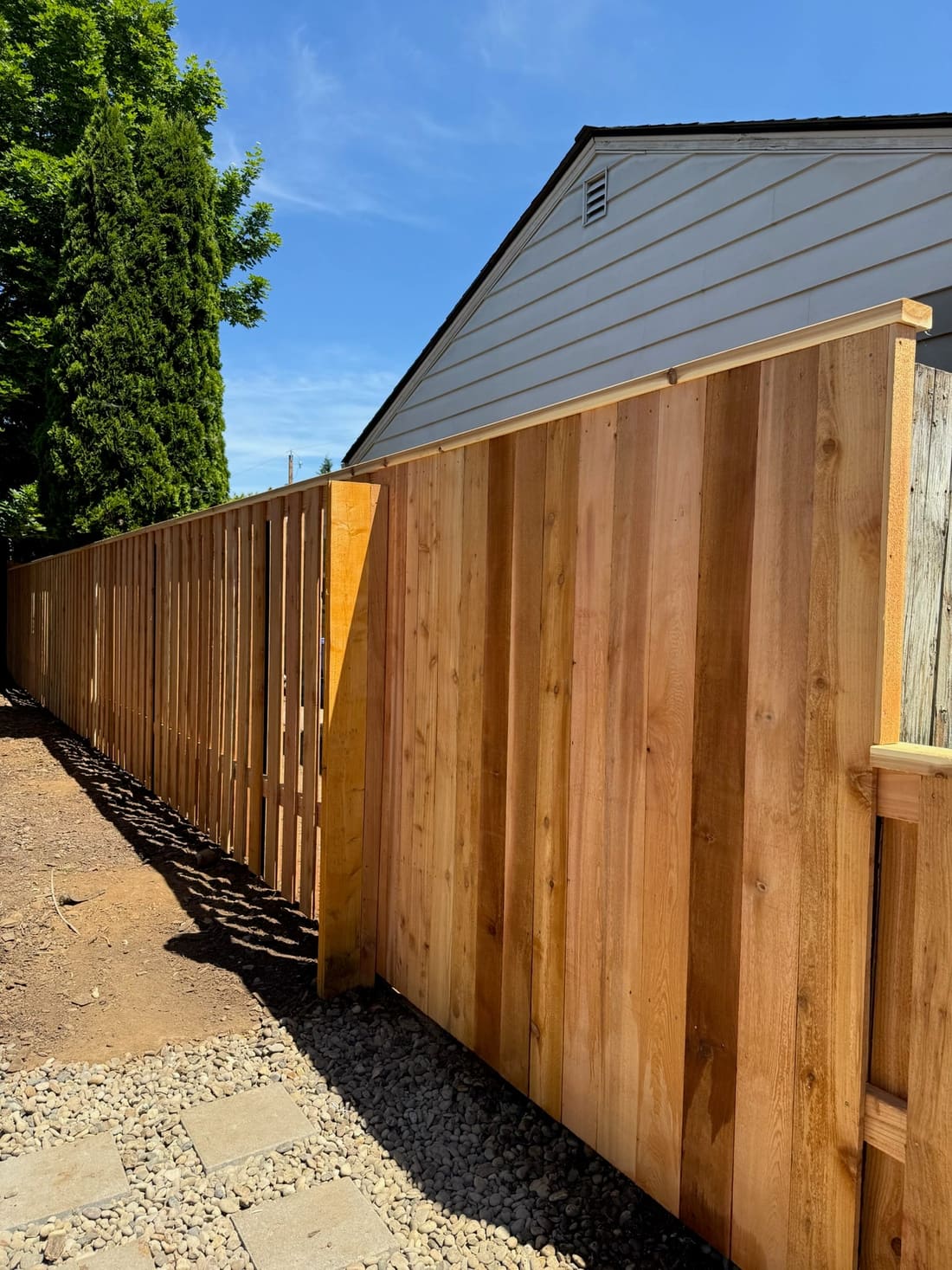
Good Neighbor (Shadow-Box)
Boards alternate on each side of the rails, so the fence looks the same, and finished, from both your yard and your neighbor's. Nobody gets stuck with the ugly side, and it lets a little air through, which helps in windy spots. We wrote a full guide on good neighbor fences with real photos if you want the details.
Board on Board
Boards overlap so there are no gaps, even after the wood naturally moves and dries out over the seasons. It is the choice when full, lasting privacy is the priority.
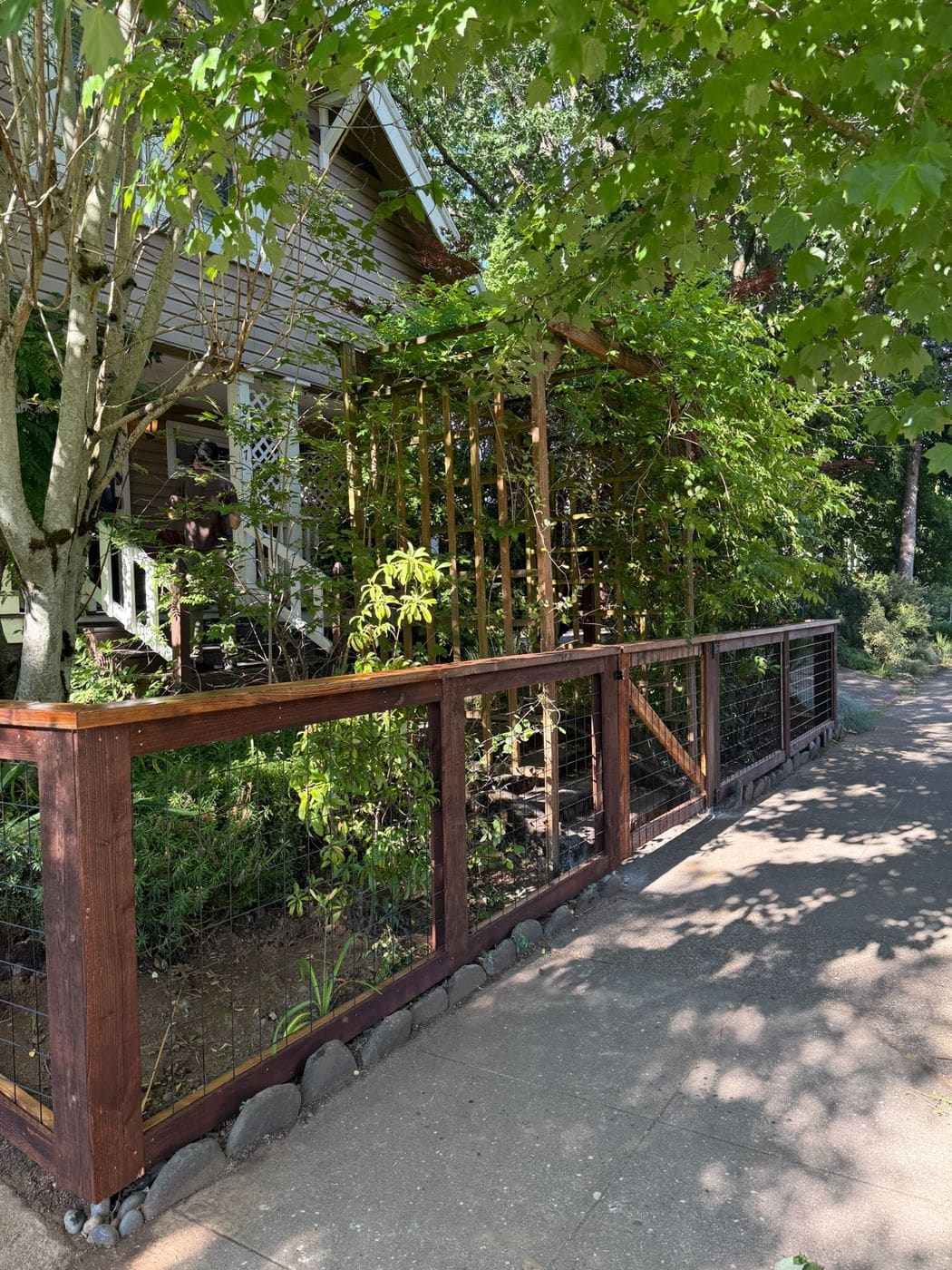
Hogwire
A modern cedar frame around a welded wire panel. It keeps your view and your light while still defining the yard. It is popular for gardens, for pets, and for homes with a backdrop you do not want to block. See our full hog wire fence installation page for heights, specs, and where it works best.
Chain Link Fencing
Chain link is the practical pick: affordable, low maintenance, and hard to beat when security matters more than looks. It is a favorite for back yards, dog runs, and property lines. You can soften the industrial look with privacy slats that block roughly 75 to 95 percent of the view, depending on the slat, add top and bottom rails for strength, and choose black, green, or galvanized frames.
Colorbond Fencing
Colorbond steel is the most durable fence we install. Our Colorbond panels are 100 percent rot resistant, corrosion resistant, and fire retardant, and they come in styles like Woodland Grey, Jasper, and Monument. It is the pick for homeowners who would rather never think about their fence again.
Vinyl Fencing
Vinyl is the no-upkeep option: it never needs stain or paint, and it will not rot, warp or splinter. It comes in solid privacy panels, semi-privacy and picket styles, usually in white, tan or gray. The trade-off is that a damaged panel has to be replaced rather than repaired, and the color is set for the life of the fence, so pick a color you will still like in twenty years.
Fence Ideas That Work in Portland Yards
Style is only half of it. These are the design ideas we are asked about most, and the ones that hold up in our weather.
- Lattice or trellis top: a foot of lattice over a solid fence softens the look and lets climbing plants take over. Remember that Portland counts lattice toward the fence height.
- Cap and trim: a cedar cap along the top and trim boards over the posts make a basic privacy fence look custom, and the cap sheds rain off the end grain.
- Mixed runs: hog wire along the front or the view side, solid cedar along the neighbor sides where privacy matters. One fence, two jobs.
- Horizontal boards on steel posts: the modern look, on posts that will never rot at the ground line.
- A contrasting kickboard: a darker stained board along the bottom grounds the fence visually and keeps the pickets out of wet soil.
- Semi-privacy spacing: boards set with a gap screen the view while letting light and wind through, which suits small yards and gardens.
- Stepped or racked on a slope: a stepped fence keeps each panel level and steps down the hill, while a racked fence follows the slope. Stepping looks crisp but leaves triangle gaps at the bottom, so it usually needs a kickboard.
- An arbor gate: a walk gate set under an overhead arbor turns the entry into a feature. Gresham allows one entry arbor per lot in the front yard, up to 10 feet tall.
Want full privacy in cedar? Our guide to the cedar privacy fence compares standard, board on board and semi-privacy builds.
The gate is the part you touch every day. These fence gate ideas cover the designs that stay square, and why most gates sag.
What Actually Makes a Fence Last, Not Just the Style
Two cedar fences can look identical on day one and be worlds apart in five years. The difference is what is under the surface. Here is what we build into every fence, and what to ask any contractor about before you sign.
Grade 1 cedar, never builder grade
Most companies use Grade 2 builder-grade cedar, which has more knots and warps, twists, and cracks in our wet climate. We use at least Grade 1 cedar on every install, with fewer knots and far less warping, and we do not charge extra for it. It is the single biggest reason a fence stays straight and clean-looking for decades.
Stainless steel nails and fasteners
Cheaper fasteners rust and bleed black streaks down your boards within a year or two. We use stainless steel nails and fasteners on every cedar install, standard, so you never get that staining.
Pressure-treated or steel posts
The posts usually fail before the boards do, and our wet clay soil and freeze-thaw winters are hard on them. We set heavy-duty pressure-treated posts, or upgrade to lifetime steel posts that never rot. With our steel posts we can hide them behind matching wood, so both sides still look like a true cedar fence.
The upgrades that quietly matter
A top rail cap sheds water off the end grain and keeps boards from warping and cupping, which is why it is our best-selling upgrade. A kick board along the bottom stops pets from digging under and keeps the pickets up out of the wet soil. Small details, big difference in how long the fence holds up.
Our fence installs carry a limited 3-year workmanship warranty, 5 years on select premium builds, plus a limited lifetime warranty on steel posts. Our crews are experienced fence specialists with at least five years on the tools, not day-labor, and we offer financing with 12 months no interest so a quality fence fits the budget.
Still deciding between cedar, vinyl, and steel? Our guide on choosing the right fencing material breaks down the trade-offs.
Which Fence Type Is Right for You?
A quick cheat sheet based on what matters most to you:
| If you want... | Best pick |
|---|---|
| Full privacy | Board on board or standard cedar |
| A modern look | Horizontal cedar or hogwire |
| The same look on both sides | Good neighbor (shadow-box) |
| To keep your view | Hogwire |
| Lowest maintenance, longest life | Colorbond steel |
| Security on a budget | Chain link with privacy slats |
| Pets that dig or climb | Board on board with a kick board |
Whichever style you land on, cedar needs refinishing every few years around here. Here is how long stain needs to dry before rain in Portland, and the months when the weather actually cooperates.
Frequently Asked Questions
What is the most popular fence style in Portland?
Standard vertical cedar is still the most common, but good neighbor and horizontal styles have grown fast because they look finished from both sides and suit newer homes.
What is a good neighbor fence?
A good neighbor, or shadow-box, fence alternates the boards on each side of the rails so it looks the same and finished from both yards. Nobody is stuck with the bad side.
Which fence lasts the longest?
Steel lasts the longest with the least upkeep. Among wood fences, a Grade 1 cedar fence on steel posts with a top rail cap will far outlast a builder-grade cedar fence on wood posts.
Do I need a permit to build a fence in Portland?
Usually not for a normal backyard fence. Inside the City of Portland a wood fence needs no building permit up to 7 feet, masonry up to 4 feet, and chain link up to 8 feet. Zoning still limits fences to 3 feet 6 inches in the front setback and 8 feet in the side and rear setbacks, and pool barriers always need a permit.
What is the lowest-maintenance fence?
Colorbond steel needs almost no upkeep. Cedar lasts a long time with a coat of stain every few years, which also keeps it from graying.
Ready for a fence that lasts?
We do free, no-pressure fence quotes for Portland-area homeowners, and we help you pick the style and build that fit your yard.
Licensed, bonded & insured · Grade 1 cedar & steel posts · 20+ years in the Portland area · Financing available
Gorilla Works proudly serves Portland, Gresham, Beaverton, Hillsboro, Tigard, Lake Oswego, Happy Valley, Milwaukie, Troutdale, Vancouver WA, and Camas WA. Call (971) 343-4964 or request fence installation.
Adding a powered gate to the driveway is its own project with its own code requirements. See our guide to automatic gate installation before you plan one into a new fence.