The five main cedar fence styles are standard vertical, board on board, good neighbor (shadowbox), horizontal and hog wire. Board on board gives the most privacy and keeps it as the wood dries. Good neighbor looks finished from both yards. Horizontal is the modern look. Hog wire marks the line without blocking the view. Most privacy styles are built 6 feet tall.
Not sure which style fits your yard? Get a free cedar fence quote. We measure, walk the line with you, and check your city's height rules before anything is ordered.
We build all five of these styles around Portland. For how our crews install them, see our Portland fence contractors page. Our family company has built fences around Portland since 2002.
Weighing the budget too? See what a cedar privacy fence costs in Portland in our 2026 price guide.
Why is cedar used for privacy fences?
Because the heartwood resists rot without chemical treatment. The USDA Forest Products Laboratory rates western red cedar heartwood as resistant to very resistant to decay. That natural durability, plus the fact that cedar stays relatively straight and takes stain well, is why it is the default privacy fence wood across the Northwest. It is not immune to decay, especially where boards sit in wet soil, which is why the build details below matter.
What are the main cedar fence styles?
| Style | How it is built | Privacy | Best for |
|---|---|---|---|
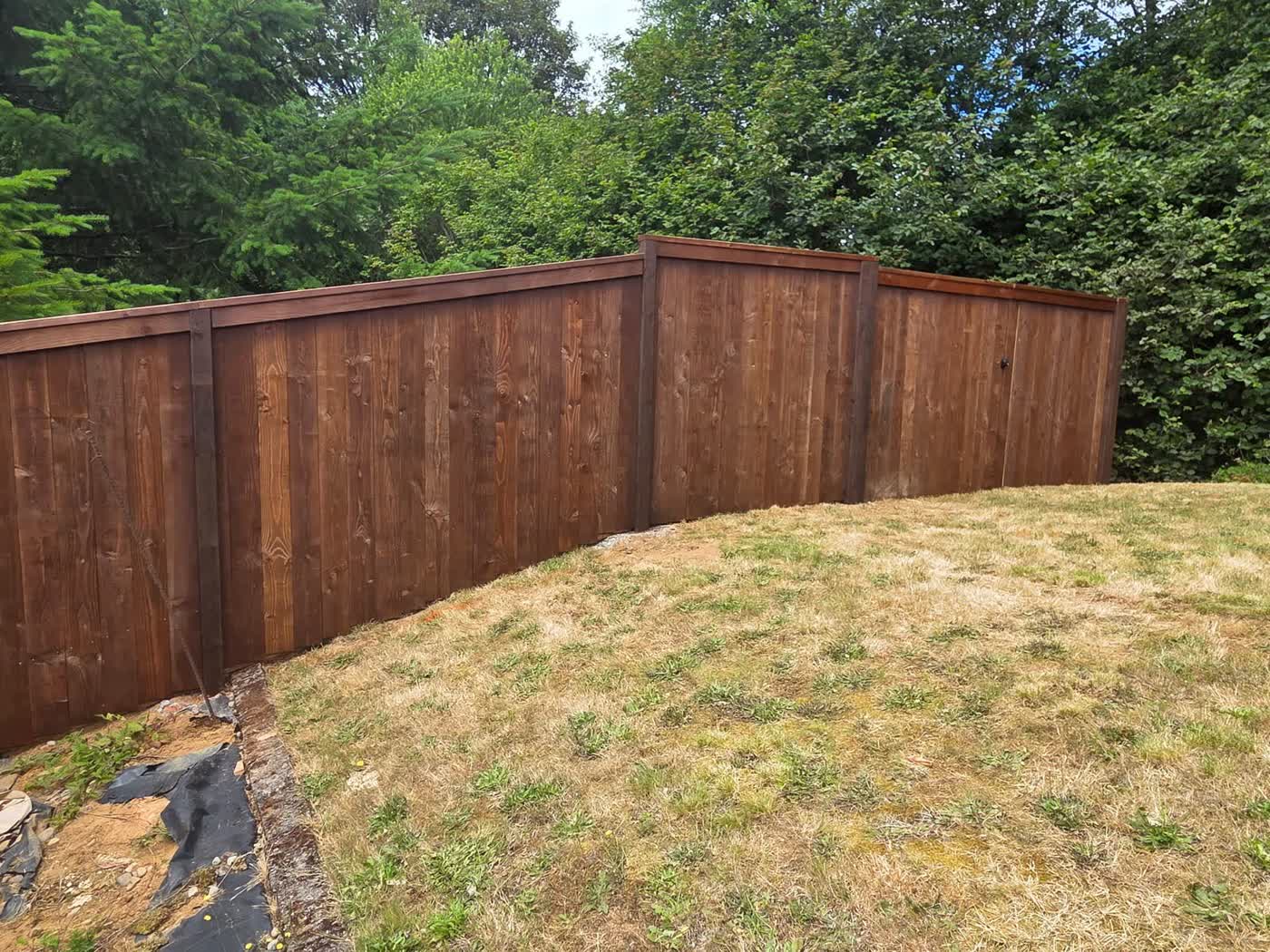
| Standard vertical | Vertical boards butted edge to edge on one face of the rails | Full when new. Thin gaps can open as the cedar dries and shrinks | Any house, and yards that slope |
| Board on board | A first layer with a gap of about 1.5 inches between boards, then a second layer covering every gap | Full, and stays full as the wood moves | Maximum privacy that lasts |
| Good neighbor (shadowbox) | Boards alternate on each side of the rails, so both sides look finished | Near full. Solid straight on, slivers of view at an angle | Shared property lines and windy lots |
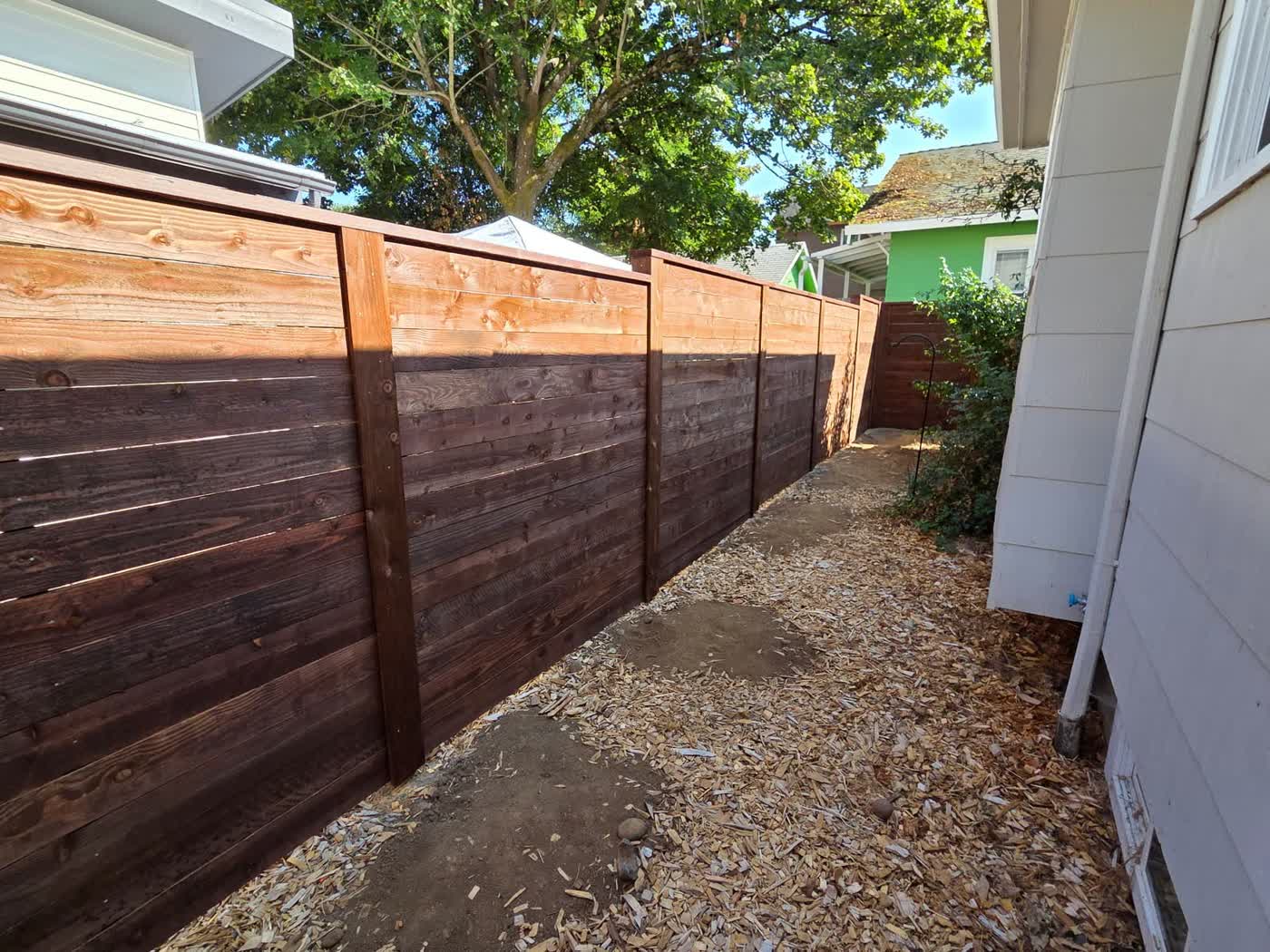
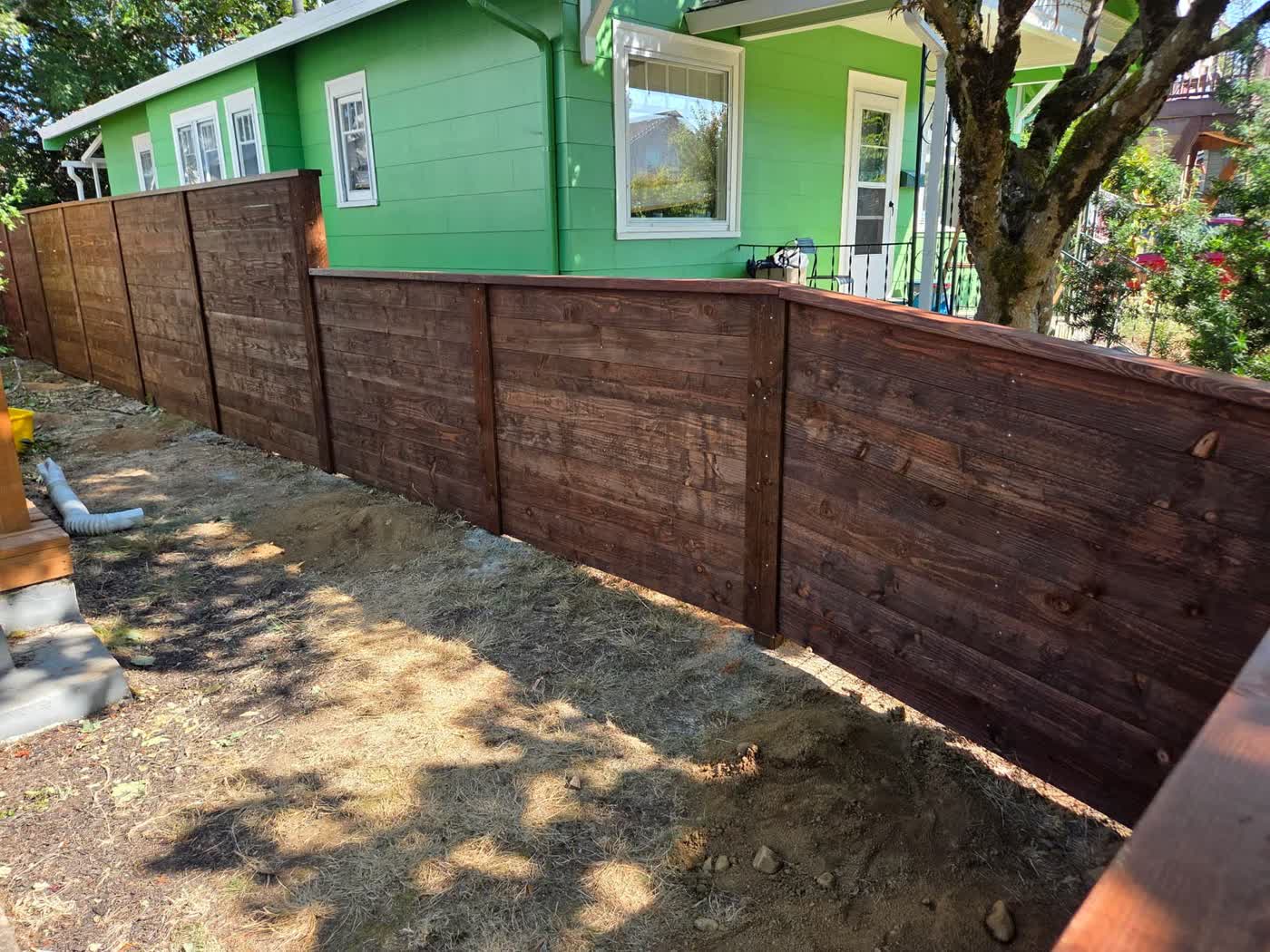
| Horizontal | Boards run sideways between posts with tight or spaced gaps | Full or semi, depending on the gap | Modern homes, often in clear cedar |
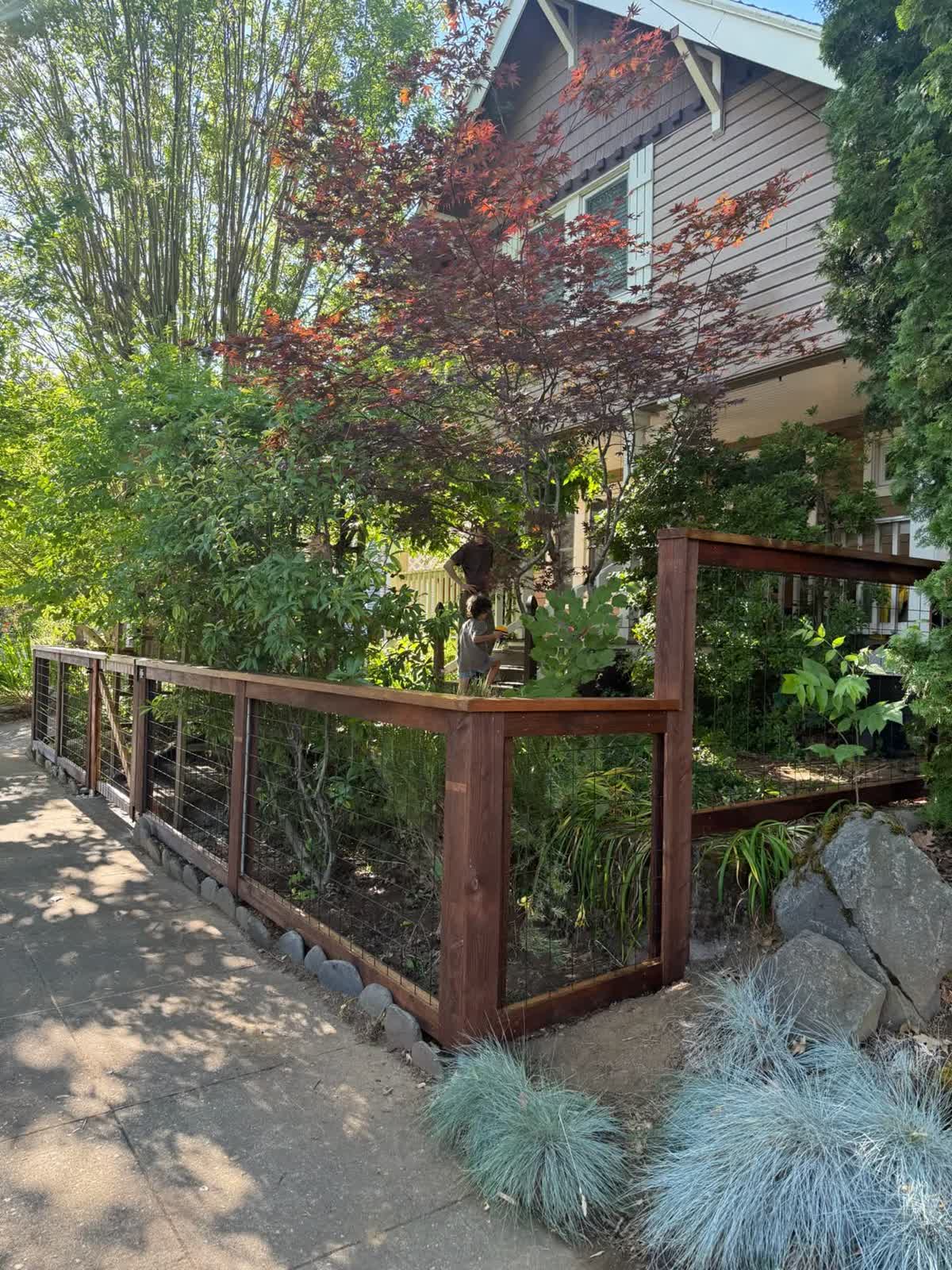
| Hog wire | A cedar frame around welded wire panels | Low. Keeps the view open | Gardens, pets and view lots |
The five cedar fence styles, in real photos
These are fences our crews built, one of each style, so you can see what the table means on a real yard.
Standard vertical
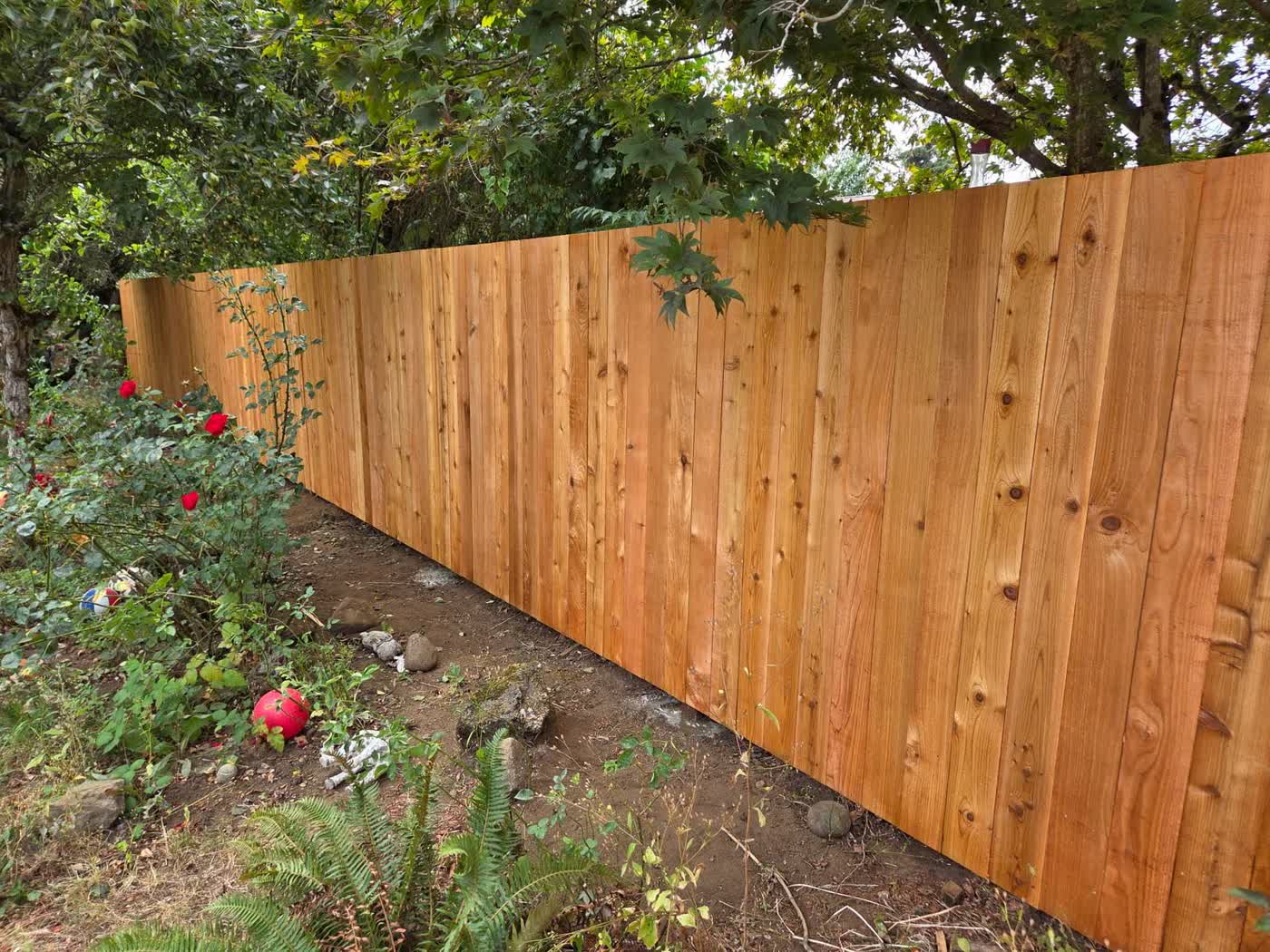
Board on board
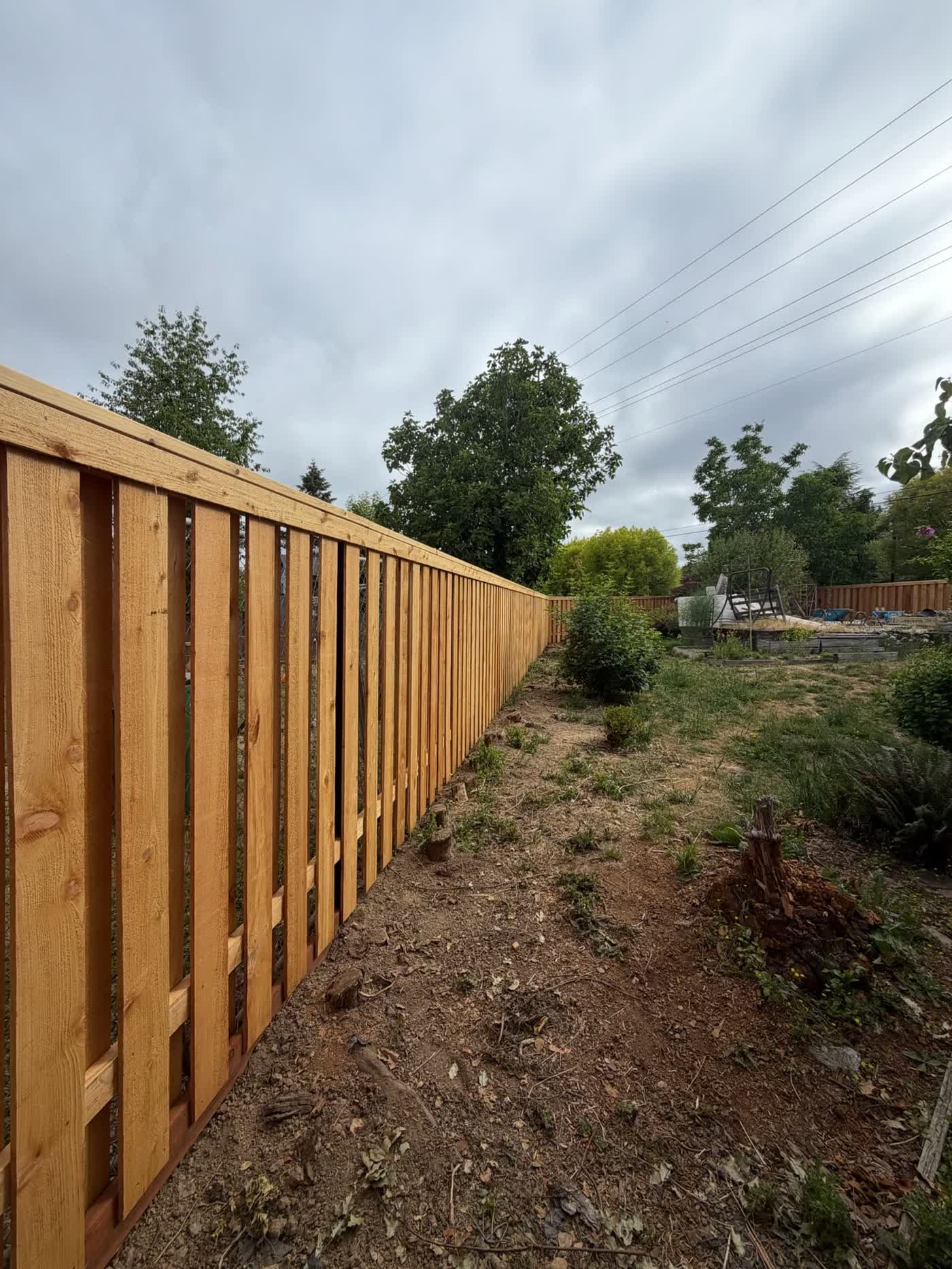
Good neighbor (shadowbox)
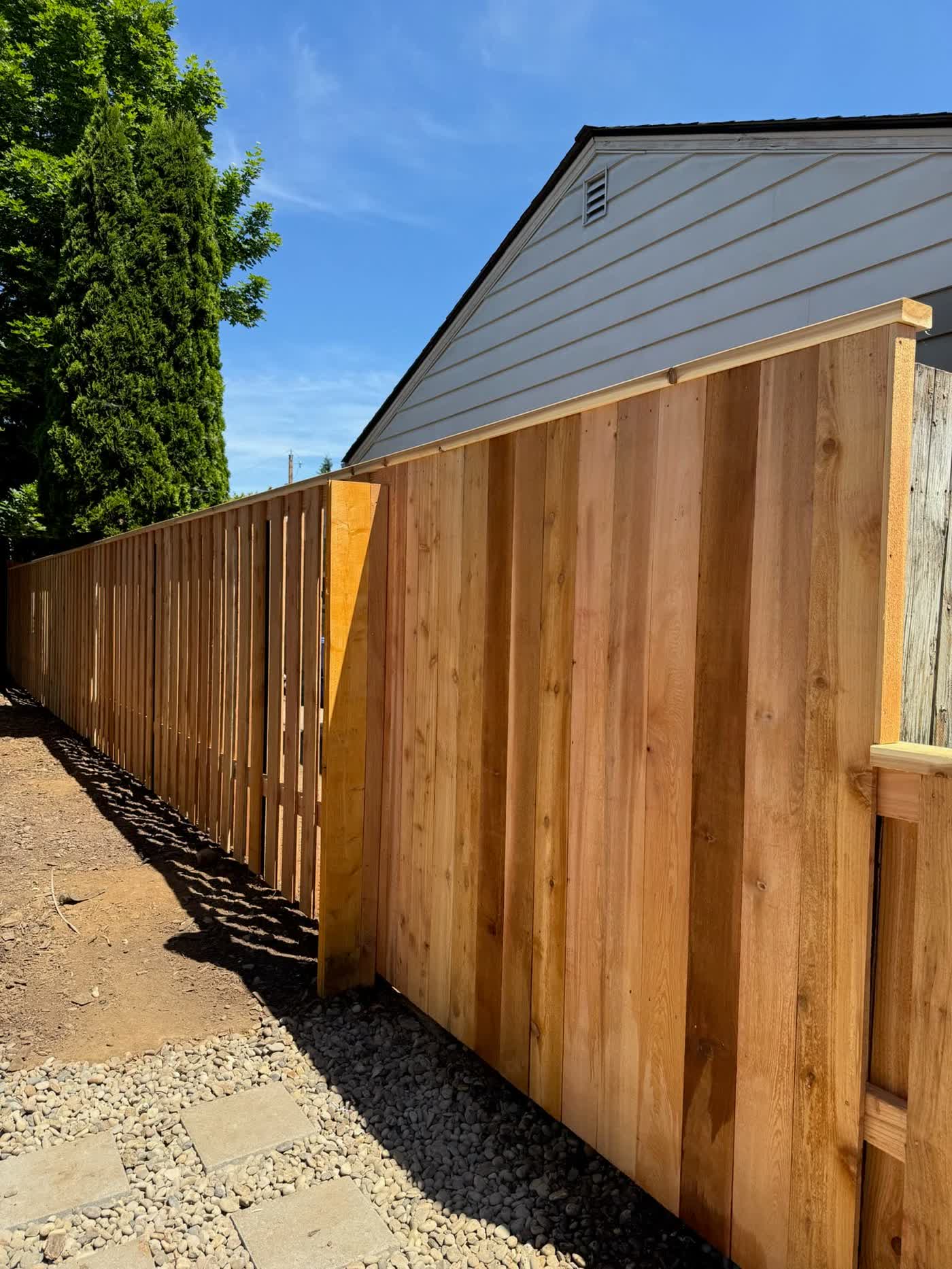
Horizontal
Hog wire
Want a closer look at the most private one? Our board on board fence page has more photos and the full build.
Which cedar fence style should you pick?
Pick by what the fence has to do first. The look comes second.
- Full privacy that stays full: board on board. Cedar shrinks as it dries, and the 1.5 inch gap in the first layer is planned for that, so the screen never opens up.
- A shared property line where the neighbor is splitting the cost? Good neighbor. Nobody gets stuck with the back side of the fence.
- On a slope, go standard vertical. Vertical boards follow the grade. Horizontal boards have to step down at every post.
- Modern houses usually look best with horizontal boards, and clear cedar is worth it there: few knots, and it ages more evenly.
- Hog wire is for marking the line or keeping a dog in while you keep the view.
- Front yard in Portland? The city caps fences at 3 feet 6 inches in the front setback, so no 6 foot privacy style there.
See our horizontal fence ideas.
See how we build a hog wire fence in Portland.
Any of the five can go on wood posts set in concrete or on lifetime steel posts. Steel does not have to change the look: the line post can be covered with matching cedar, so both yards see a wood fence and only the inside of the post is steel.
Here is how a wood fence on metal posts goes together.
Every style can be built in three packages, Silver, Gold and Platinum, from Grade 1 cedar on pressure-treated posts in concrete up to Clear cedar on PostMaster steel posts. Silver carries a limited 3-year workmanship warranty, Gold and Platinum 5 years. See the packages on our cedar wood fence installation page.
What is a semi-privacy fence?
A semi-privacy fence screens the view without walling the yard off. The boards are spaced, alternated or run horizontally with gaps, so you get a sense of enclosure and a softer look while light and wind still pass through. It suits front yards, gardens, and side yards where a solid 6 foot wall would feel like a box. It also takes some of the wind load off the fence, which matters on exposed lots.
A good neighbor, or shadowbox, fence sits close to full privacy: it reads as solid straight on, but you can catch slivers through it at an angle. Here is how it compares with the other styles in our guide to good neighbor fence styles.
How tall should a cedar privacy fence be?
Six feet is the standard, and in Portland it fits the rules with room to spare. The city allows up to 8 feet in the side and rear setbacks, and a wood fence does not need a building permit until it passes 7 feet, so a 6 foot fence clears both rules. Lattice or a decorative top counts toward the height. In the front setback, Portland caps fences at 3 feet 6 inches, so a front-yard fence is a low one no matter what it is made of.
What makes a cedar fence last?
- Cedar grade: Grade 2, often sold as builder grade, has more knots and warps, twists and cracks in a wet climate.
- Posts: posts sit in the ground, so they need to be rated for ground contact, set in concrete. The American Wood Protection Association puts posts in its ground contact category, Use Category 4A or higher. Steel posts are the option that never rots at the ground line.
- Fasteners: iron from ordinary nails reacts with the natural extractives in cedar and leaves blue-black stains. Stainless steel, hot-dipped galvanized or aluminum prevents it.
- A kickboard: a board along the bottom keeps the pickets up out of wet soil, where cedar rots first, and stops dogs digging under. Our crews build kickboards from pressure-treated 2x6, 2x10 or 2x12 lumber, and a kickboard is an extra charge, not part of the standard fence.
- A top cap: a cedar cap across the top shields the end grain of the boards from rain.
- Stain: a penetrating stain slows weathering and helps the boards shed water. Time it around the rain.
Here is how long stain needs to dry before rain in Portland.
Planning a cedar privacy fence?
We build all five styles across the Portland area: standard, board on board, good neighbor, horizontal and hog wire, in Grade 1 cedar with stainless fasteners. Free on-site quote. Replacing an old fence? We tear it out and haul it away, priced per foot on your written estimate.
OR CCB 198186 · WA L&I EXTERDC884PP · Every install crew is led by an installer with 5+ years of experience · Limited 3-year workmanship warranty
Frequently Asked Questions
How long does a cedar privacy fence last?
A well-built cedar fence typically lasts 15 to 30 years. The grade of the cedar, whether the posts are rated for ground contact or steel, and keeping the boards up off wet soil make the biggest difference.
Do cedar fence boards shrink?
Yes. Cedar shrinks mostly across its width as it dries, so boards butted tight on a standard fence can open thin gaps over the first dry season. The boards do not get shorter in any way you would notice.
Should a cedar fence be stained?
It does not have to be, since cedar weathers to a silver gray on its own. Stain slows that weathering, helps the boards shed water and keeps the color. If you stain, give it dry weather to cure before the next rain.
Which side of a privacy fence faces the neighbor?
By convention the finished side faces out, toward the neighbor and the street, and if you have an HOA, check its rules. A good neighbor fence or a board on board fence avoids the question because both sides look finished.
Sources
- USDA Forest Products Laboratory: Thuja plicata (western redcedar) technical sheet
- Real Cedar: care and maintenance of western red cedar (iron stains and recommended nails)
- American Wood Protection Association: Select the right preserved wood for your project (use categories)
- City of Portland, Fence Residential Building Permits
- City of Portland, Brochure 3: Fences, Decks and Outdoor Residential Projects
Gorilla Works proudly serves Portland, Gresham, Beaverton, Hillsboro, Tigard, Lake Oswego, Happy Valley, Milwaukie, Troutdale, Vancouver WA, and Camas WA. Call (971) 343-4964 or request a cedar fence quote.