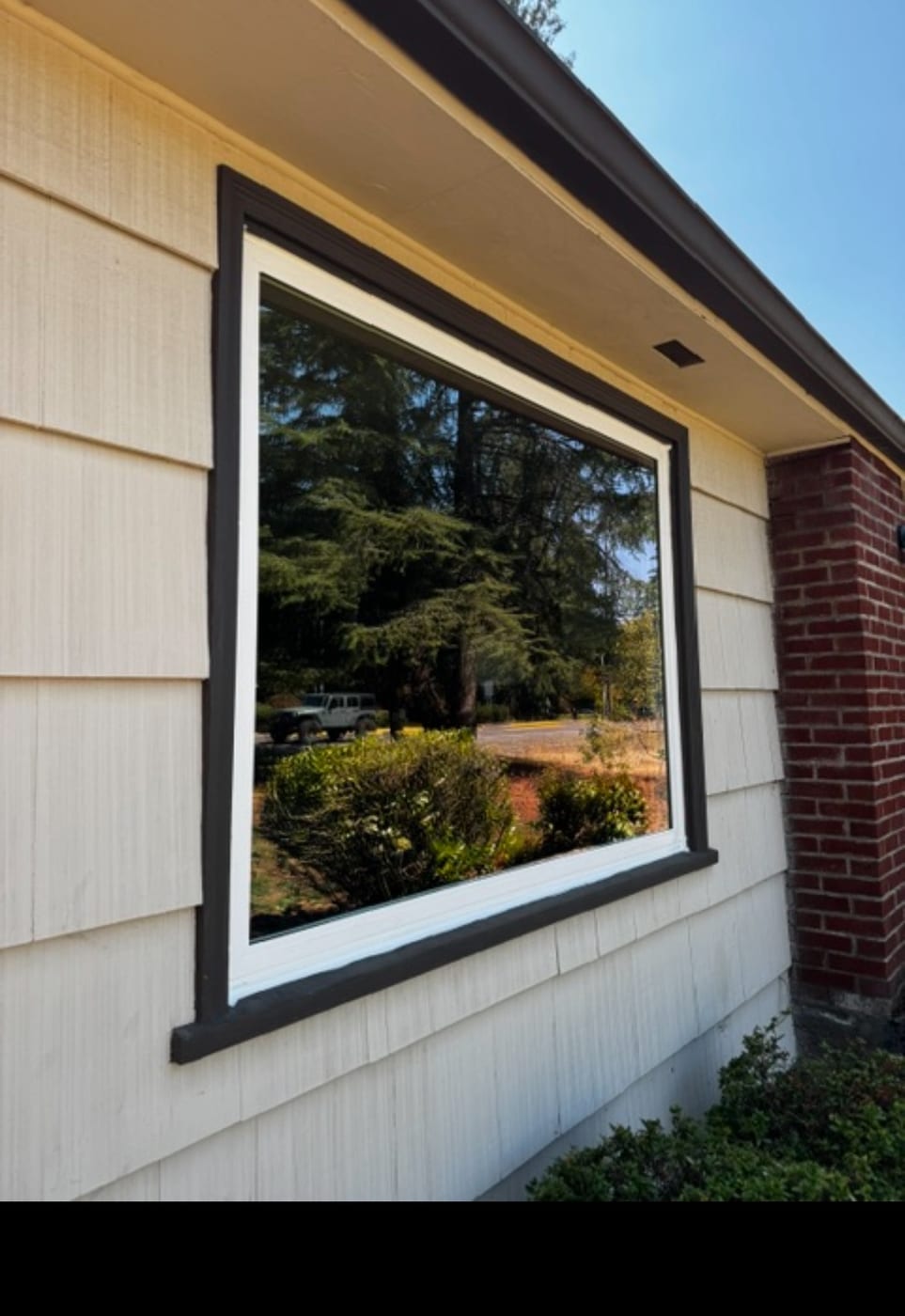
Here is the honest answer most window ads will not give you: in our mild, wet Pacific Northwest climate, the most expensive, highest-rated window on the showroom floor is usually not the one worth your money. The national brands push triple pane and the lowest U-factor they can sell you. For a Portland or Vancouver home, most of that is a cold-climate upgrade you are paying for and will barely feel.
What matters here is different. We get rain, not deep cold. So a good seal, a correct install, and resistance to condensation do more for a Northwest home than chasing the lowest possible U-factor. We install windows across the metro all year, and this is the advice we give our own neighbors.
The three numbers that actually matter
Portland and western Oregon sit in climate zone 4C, a marine climate. Mild, wet winters, not the kind of cold that makes a third pane of glass pay off. Instead of marketing numbers, these are the real targets.
- Oregon code, U-0.27. Under the current Oregon energy code, new and replacement windows have to reach a U-factor of 0.27 or lower. A good double-pane Low-E window hits that comfortably.
- Washington, U-0.30. Across the river in Clark County the current code allows up to 0.30, with a tighter number on the way.
- ENERGY STAR, the premium tier, U-0.22. The latest ENERGY STAR spec for our Northern zone asks for 0.22. That is a nice-to-have label, not a code requirement, and getting there usually means a premium glass package or triple pane.
Here is the honest part. Code is 0.27, and a quality double pane clears it. ENERGY STAR 0.22 is a real step better on paper, but in a mild 4C climate the extra cost to chase it rarely pays back. You are welcome to buy it. Just know you are buying comfort insurance, not a requirement.
Want a straight recommendation for your house?
We will match the window to your home and exposure, not a brand quota, and give you a written quote. Free and no pressure.
Licensed, bonded & insured · Milgard-certified · 20+ years in the Portland area · Flexible financing
The triple-pane myth, in two parts
Triple pane is a real product with real uses. In Portland, most of what you hear about it is oversold. Two honest corrections.
It barely moves your energy bill here
Building scientists who have run the numbers are blunt about it: in a mild climate, triple glazing has a long payback and usually is not worth it compared to just building a tighter, better-insulated house. Its honest wins are cold climates and condensation resistance, not Portland heating bills.
It adds very little for noise
This one surprises people, because every window company sells triple pane as the quiet upgrade. The research says otherwise. A third pane adds only a small amount of noise reduction over a good double pane, because the panes sit too close together to make much difference to sound. The real fixes for noise are laminated glass, two panes of different thickness, and a wider air gap, not a third pane. On the STC noise scale, a standard double pane runs about 26 to 32 and a triple runs about 28 to 34, a difference you will struggle to hear. If you live near I-5, I-205, or a flight path and noise is your goal, ask for laminated glass, not triple pane.
We break the whole glass trade-off down in our double pane vs triple pane in Portland guide, so this page stays on the bigger question of the best overall window for a Northwest home.
What actually fails first on a window here
When people ask how long windows last, they picture the frame rotting. It is usually the glass that goes first. The sealed glass unit, the two panes with the gas in between, typically fails in about 15 to 25 years. When that seal breaks you get permanent fog or haze between the panes, and no cleaning fixes it. After that, it comes down to the frame material, and our wet climate is hard on some materials more than others.
- Wood rots and its paint fails, starting at the sill, exactly where our rain sits.
- Aluminum conducts cold, so the frame sweats and drips in winter, and it can corrode.
- Old or thin vinyl can warp and its seals let go.
- Single pane just sweats, because the cold glass meets warm indoor air.
In a dry desert climate, heat is what kills a window. Here, it is rot and condensation, and that should drive what you buy. In the close-in Portland neighborhoods full of pre-war homes we see the old wood and aluminum failures, rotted sills and winter sweat. Out in the newer suburbs it is more often the sealed glass units from the 1990s and 2000s fogging up right on schedule. The homes we replace windows in run the whole range, built anywhere from the 1940s to the early 2000s.
Frame materials for our climate
| Material | How it holds up in the wet PNW | Our take |
|---|---|---|
| Vinyl | Does not rot or corrode, no refinishing, shrugs off moisture | What we install on most homes here |
| Wood | Insulates and looks great, but needs upkeep or it rots | Only if you will maintain it |
| Aluminum | Strong but conducts cold, so it sweats and can corrode | We steer people away from it here |
| Fiberglass | Tough and stable, a solid choice | Good, but costs more than vinyl usually needs to |
For nearly all of our window work we install Milgard vinyl windows, mostly the V250 and the V300 Trinsic series, because vinyl does not rot, does not corrode, and does not need refinishing, which is exactly what you want when it rains 150 days a year.
The part nobody puts in the brochure: the install
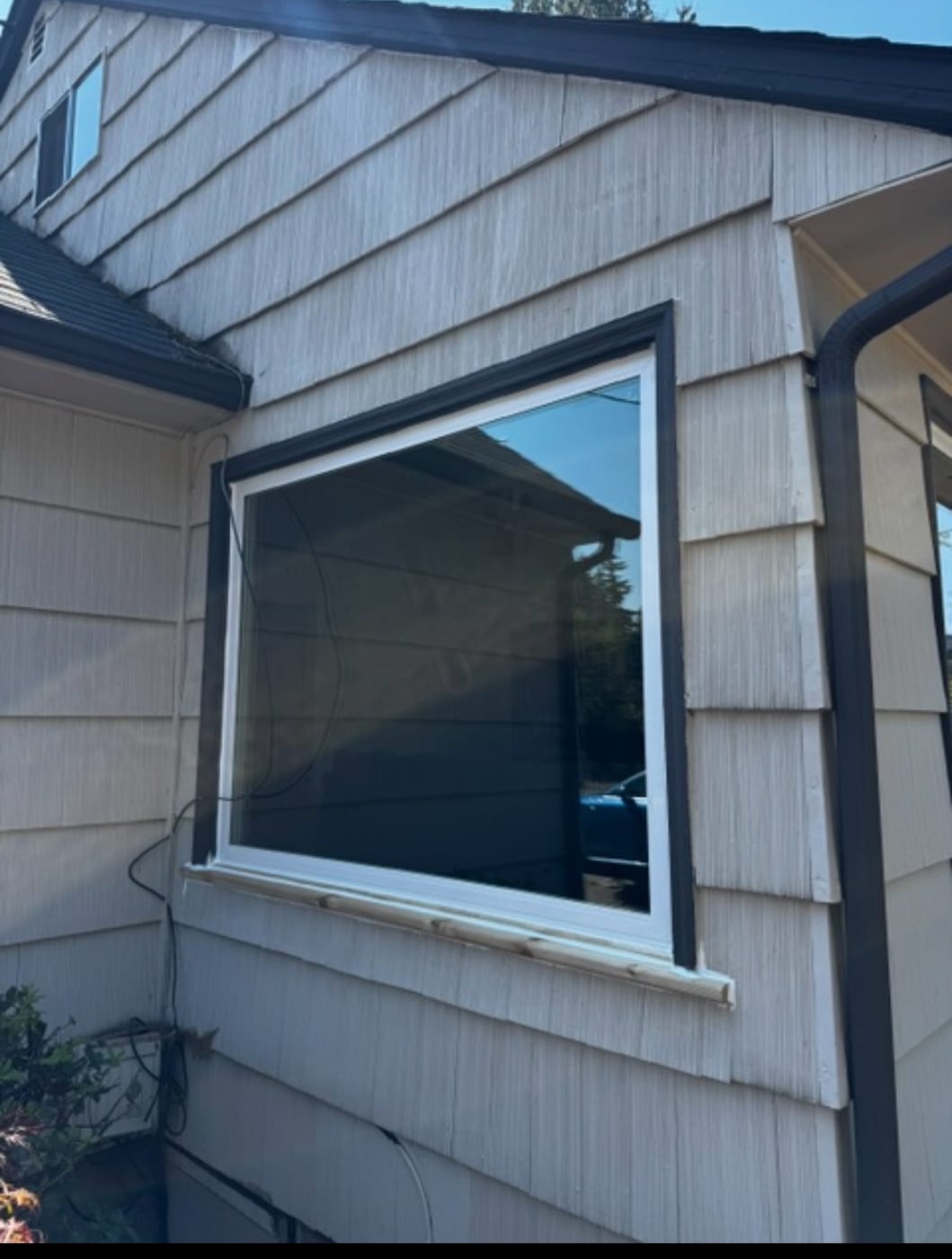
The best window in the world leaks if it is set wrong and water gets behind it. In our climate water is the enemy, not cold, and the industry is honest that most window leaks are a flashing problem, not a window problem. A cheap crew caulks the window in and calls it done. Caulk is not flashing. The right way uses a sloped sill pan, flashing that laps like shingles, and a bottom edge left open so any water that sneaks in can weep back out. We do a full tear-out and re-flash the opening on about 8 out of 10 of our jobs, which is where that gets done right. We go deeper on it in our full frame vs insert guide. If a company only wants to talk about the glass and not how it goes in the wall, that tells you something.
Condensation: what it means
- Fog or haze between the panes: the sealed glass unit has failed. The glass should be replaced. No cleaning will fix it.
- Moisture on the inside, room-side, of the glass: usually high indoor humidity meeting cold glass, worse with old single pane or aluminum frames. Better windows and some ventilation help.
- Moisture on the outside of new glass in the morning: this one is normal and actually a good sign. It means the new window is insulating so well that the outer pane stays cool. It burns off with the day.
Common questions about windows for our climate
Do I need triple pane in Portland?
For energy, no. A good double-pane Low-E window already meets Oregon code and performs well in our mild climate, and the payback on triple pane is long here. For noise, triple pane is not even the right fix; laminated glass is.
What U-factor should I look for in Oregon?
0.27 or lower meets code. ENERGY STAR's premium tier is 0.22 if you want to pay for it, but it is not required and rarely pays back in our climate.
Which window is quietest?
Laminated glass and panes of two different thicknesses do far more for sound than adding a third pane does.
Why do my windows fog up?
If the fog is between the panes, the seal has failed and the glass needs replacing. If it is on the room side, it is indoor humidity meeting cold glass.
Is vinyl really the best frame for the Northwest?
For most homes, yes. It does not rot or corrode and needs no refinishing, which is what our wet climate demands. It is what we install most.
Want a straight answer for your home?
We will look at your house, your exposure, and what you actually need, and tell you honestly whether a standard double pane does the job or whether your situation calls for something more. Call or text (971) 343-4964, or request a free quote on our window installation page.
Sources
- Oregon 2023 Residential Specialty Code, Table N1101.1(1) and N1104.4.4: U-0.27 for new and replacement windows
- ENERGY STAR Version 7.0 residential windows criteria: Northern zone U-0.22
- National Research Council of Canada, Canadian Building Digest 240: sound transmission through windows
- Green Building Advisor: when are triple-glazed windows worthwhile
Gorilla Works proudly serves Portland, Gresham, Beaverton, Hillsboro, Tigard, Lake Oswego, Happy Valley, Milwaukie, Troutdale, Vancouver WA, and Camas WA. Call (971) 343-4964 or request window installation.