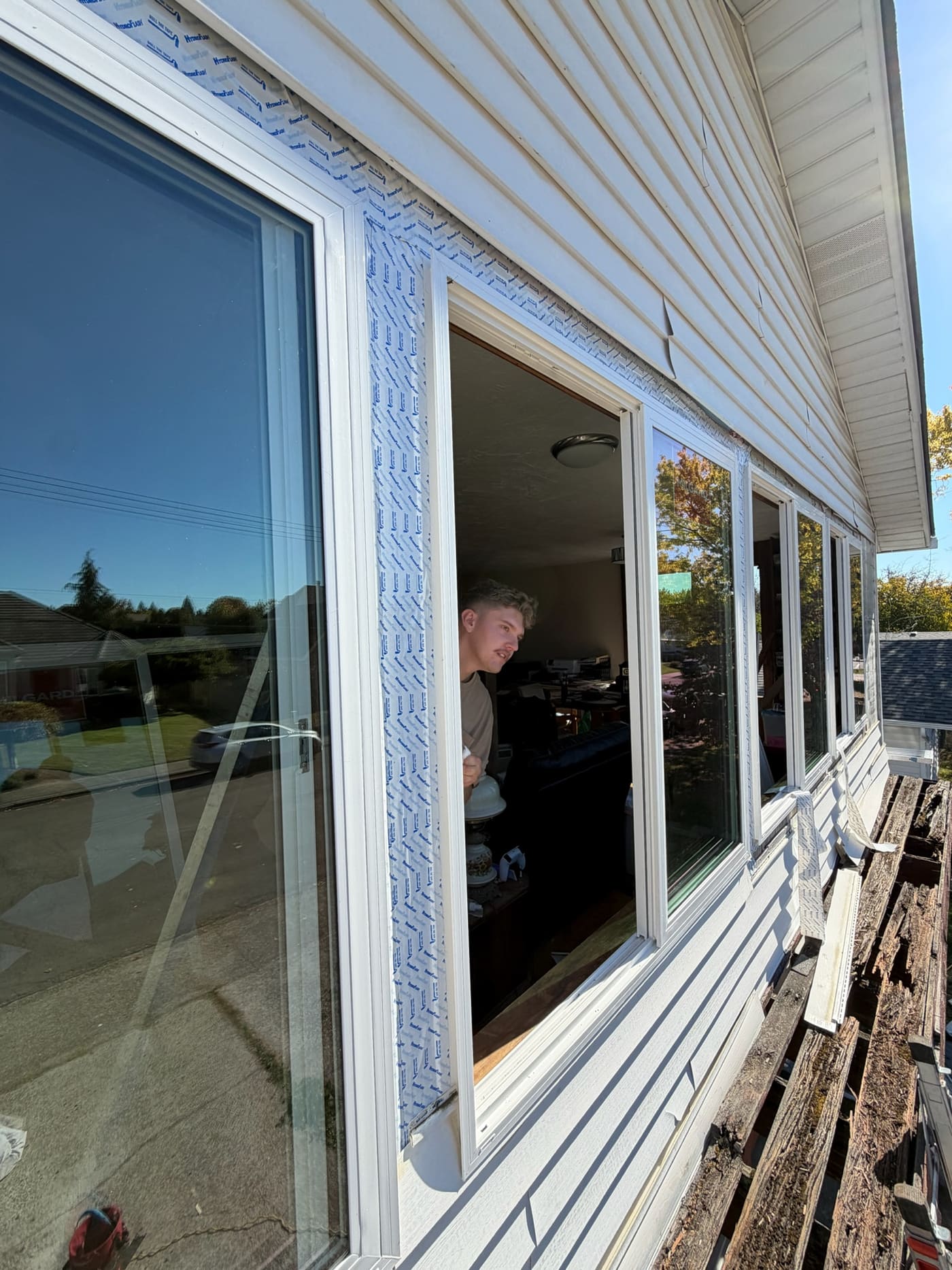
There are eight types of replacement windows worth knowing for a Portland or Vancouver home: single hung, double hung, horizontal sliding, casement, awning, picture, bay or bow, and specialty shapes. The right one for each opening comes down to three local questions. Can it stay open while it rains? Does that bedroom need an escape opening that meets code? And will the sash swing out over a deck, a walkway, or the neighbor's fence?
Most style lists online come from the window makers and stop at a drawing and three benefits. We install windows in more than a hundred homes a year around Portland, in houses built anywhere from 1942 to 2002, and most of those jobs end up in Milgard V250 Style Line or V300 Trinsic vinyl. Below is each style the way we explain it at the kitchen table, the Milgard series it comes in, and a link to our full page on each one.
Want to know which styles fit your house?
We walk every opening with you, say which style belongs where, and leave one written price that names the exact Milgard series for each window. One window or the whole house.
OR CCB 198186 · WA L&I EXTERDC884PP · Family business since 2002
The eight types of replacement windows at a glance
| Style | How it opens | Open in the rain? | Bedroom escape window? | Where it fits | Milgard series we install |
|---|---|---|---|---|---|
| Single hung | Bottom sash slides up | No | Sometimes, if the opening is tall | Bedrooms, upstairs, 1990s and 2000s homes | V250, V300, V400, C700 |
| Double hung | Both sashes slide and tilt in | No | Sometimes | Older Portland homes, second floors | V400 Tuscany only |
| Sliding | One panel slides sideways | No | Yes, if the moving panel is wide enough | Wide openings, beside decks and paths | V250, V300, V400 |
| Casement | Side hinge, cranks out | No, but seals tightest when shut | Yes, usually the easiest | Kitchens, bedrooms, windy walls | V300, V400, C700 |
| Awning | Top hinge, tilts out | Yes, in a light rain | Almost never | Bathrooms, over counters, over a picture window | V300, V400, C700 |
| Picture | Does not open | Not needed | Never | Living room views, paired with openers | V250, V300, V400, C700 |
| Bay or bow | A set of 3 to 6 units | Depends on the side units | A side casement can | Living and dining rooms, stair landings | Vinyl and fiberglass |
| Specialty shapes | Usually fixed | Not needed | Never | Gables, round tops, over doors | Built to order |
One note before the details. Every window we quote is ordered with Low-E glass and argon fill to meet the energy code where the house sits: a U-factor of 0.27 or lower in Oregon, and 0.30 in Clark County, Washington. The style does not change that requirement, so pick the style for the room and let the glass package handle the heating bill.
1. Single hung windows
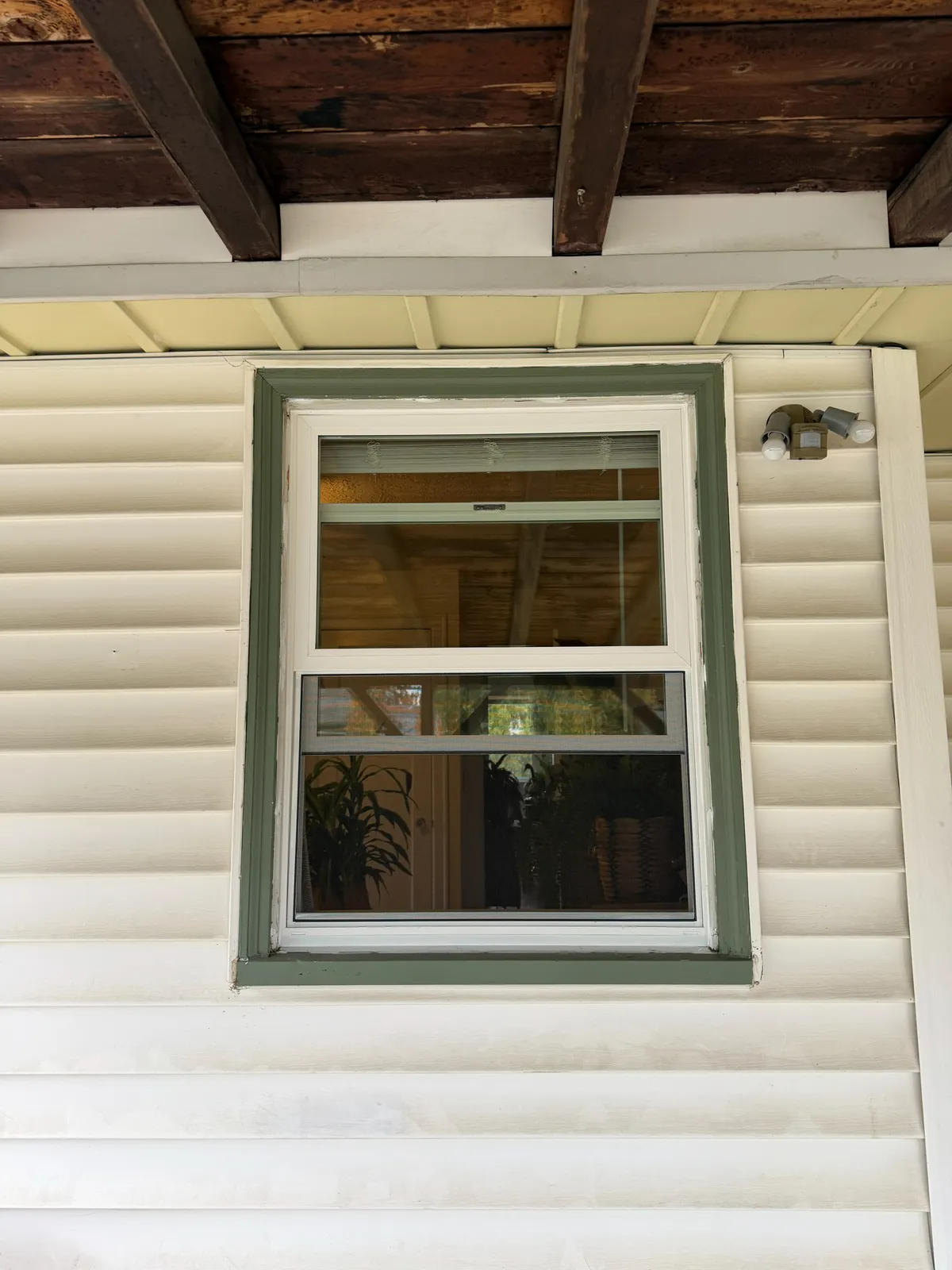
A single hung has two sashes, and only the bottom one moves. It is the window most people picture when they think of a house, and it is the style most 1990s and 2000s subdivisions around Beaverton, Hillsboro, and Vancouver were built with. With one moving sash there is less hardware to wear out, and it is the hung window every Milgard vinyl line offers.
Where it belongs: bedrooms and upstairs rooms where you want the look of a classic window and nothing swinging outward. The catch is reach. The sash has to be lifted, so a single hung high over a counter or behind a sofa is hard to use. We install single hung windows in the V250, V300, and V400 vinyl series and in the C700 fiberglass line.
Not sure whether you want one moving sash or two? Our single hung vs double hung comparison for Portland homes settles it.
2. Double hung windows
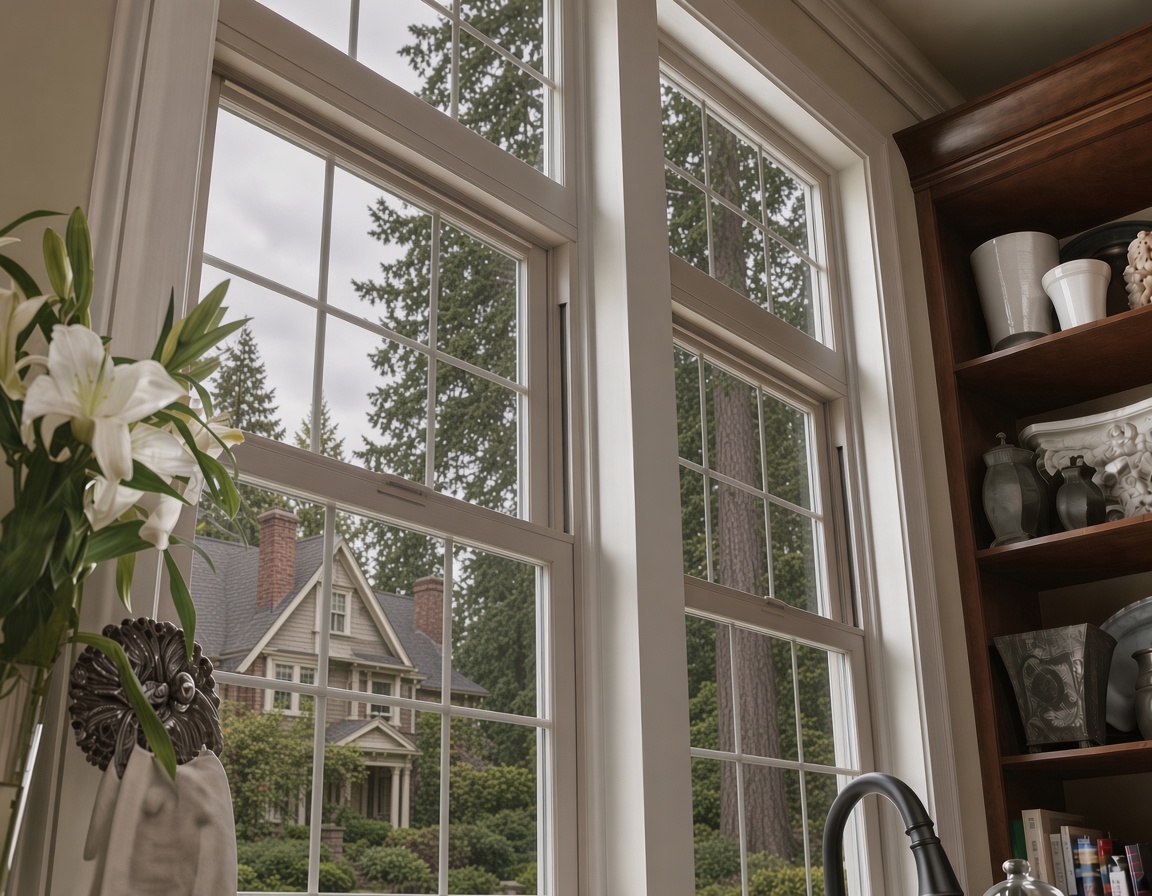
On a double hung both sashes slide, and both tilt into the room so you can wash the outside glass from inside. That tilt is the whole reason to pay extra for it on a second floor. Drop the top sash an inch in summer and warm air near the ceiling leaves on its own.
Here is the detail that surprises people: Milgard builds a double hung in exactly one series, the V400 Tuscany, and only in vinyl. There is no V250 or V300 double hung and no C700 fiberglass double hung. If a quote from anyone lists a Milgard fiberglass double hung, ask what the window really is. It also matters on Portland's older streets, because vinyl is not on the city's list of materials that skip historic review in neighborhoods like Irvington, Laurelhurst, and Sellwood. More on that below.
The full story, including when an old wood double hung is worth restoring instead, is on our double hung windows page.
3. Sliding windows
A slider moves sideways on a track, so nothing lifts and nothing swings out. It is the natural fit for an opening that is wider than it is tall, and for any wall that faces a deck, a patio, or a side-yard path where a crank-out sash would be in the way. It is also what most ranch homes from the 1960s and 1970s were built with, so on those houses the openings are already the right shape for a new slider.
There are two layouts. A two-panel slider has one fixed half and one moving half. A three-panel end-vent slider puts a big fixed pane in the middle with a narrow sliding panel on each end, which keeps the view clean and still gives a cross-breeze. On one Oregon City job a homeowner chose a 25/50/25 end vent for the living room for exactly that reason. On another Oregon City house, built in 1972, we replaced seven V300 sliders in three sizes, 72 by 48, 96 by 48, and 72 by 36, with new exterior trim, all in October.
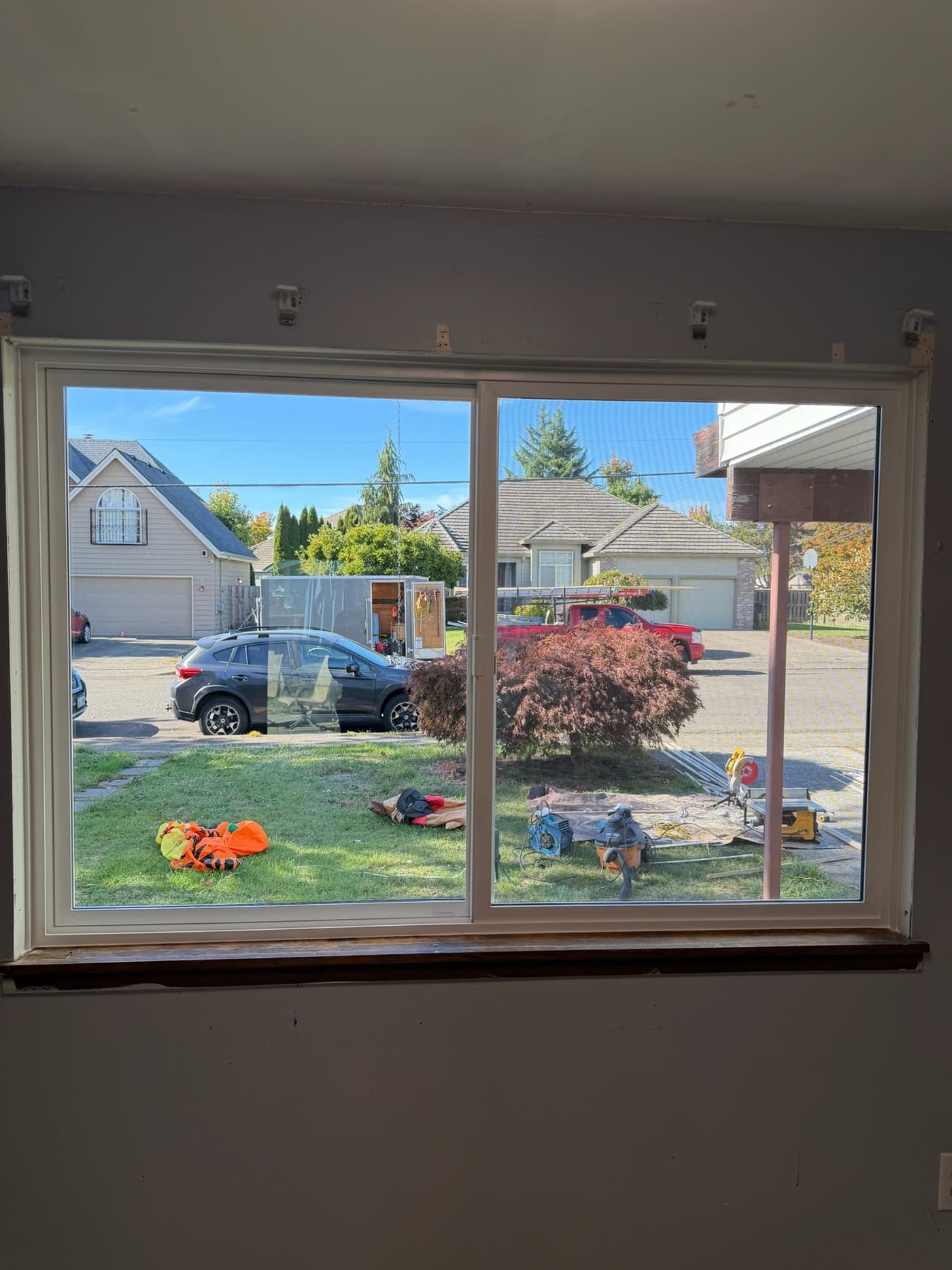
The bedroom catch: only the moving half opens, so the escape-window math applies to that half, not the whole frame. A two-panel slider has to be a good deal wider than 50 inches before its open half clears the code. We check the clear opening on every bedroom slider before it is ordered.
Layouts, egress math, and the wet-climate track detail are on our sliding windows page for Portland and Vancouver.
4. Casement windows
A casement is hinged on one side and cranks outward, and when you close it the whole sash pulls in against the frame on all four sides. That is why it leaks the least air of any window that opens, and why it is the style we point to on a wall that takes the brunt of a winter storm off the Columbia. Crank it toward the wind in July and it scoops a breeze into the room that a hung window never will.
Where it belongs: over the kitchen sink where lifting a sash is awkward, in any bedroom that needs an escape window, because a single casement opens almost the full size of the frame, and on high openings where a crank beats a reach. Where it does not: over a walkway or deck, and anywhere you plan to drop in a window air conditioner for August. We install casements in the V300 and V400 vinyl series and in C700 fiberglass, which holds its shape best on a tall sash.
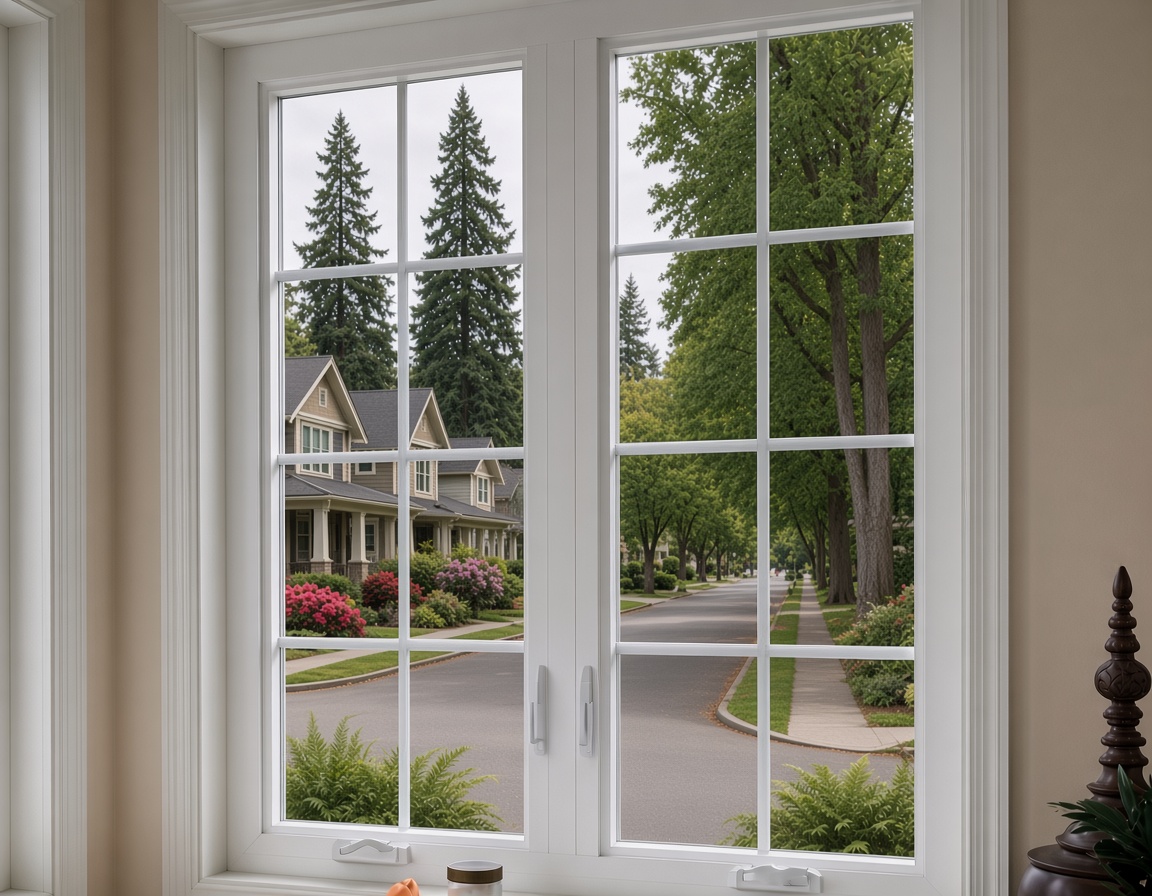
See the air-leakage numbers and the full room list on our casement windows page.
5. Awning windows
An awning is hinged at the top and tilts out from the bottom, so the open glass sits over the gap like a little roof. In a city that sees rain on more than 150 days a year, that is the one style you can leave cracked for fresh air on a wet day without a puddle on the sill. When you crank it shut it seals about as tightly as a casement.
Where it belongs: bathrooms, above a kitchen counter, high on a bedroom wall, and stacked above or below a fixed picture window so the big view stays clear and the room still breathes. The catch is the bedroom rule. An awning is wide, short, and only tilts partway, so it almost never clears the escape-opening size on its own. We pair it with a casement or a hung window in that room. Awnings come in V300 and V400 vinyl and in C700 fiberglass.
Our awning windows page covers the honest limit in a sideways storm and where we keep awnings away from walkways.
6. Picture windows
A picture window does not open, and that is its advantage. With no moving sash there is no seam for air to work through, so it is the tightest window on the house and the one that gives you the most glass for the least frame. On a Portland lot it is usually the living room pane facing the West Hills, a backyard of firs, or the street on a mid-century house that was designed around its view.
Two things to plan. First, air: in any room you want to open up, flank the picture window with sliders, casements, or hung windows, or put an awning under it. Second, size: a large pane that sits half in shade under an eave or a fir tree can crack from uneven heating with nothing touching it, so on big or partly shaded openings we spec heat-strengthened or tempered glass. Picture windows come in every Milgard series we install, V250 through C700.
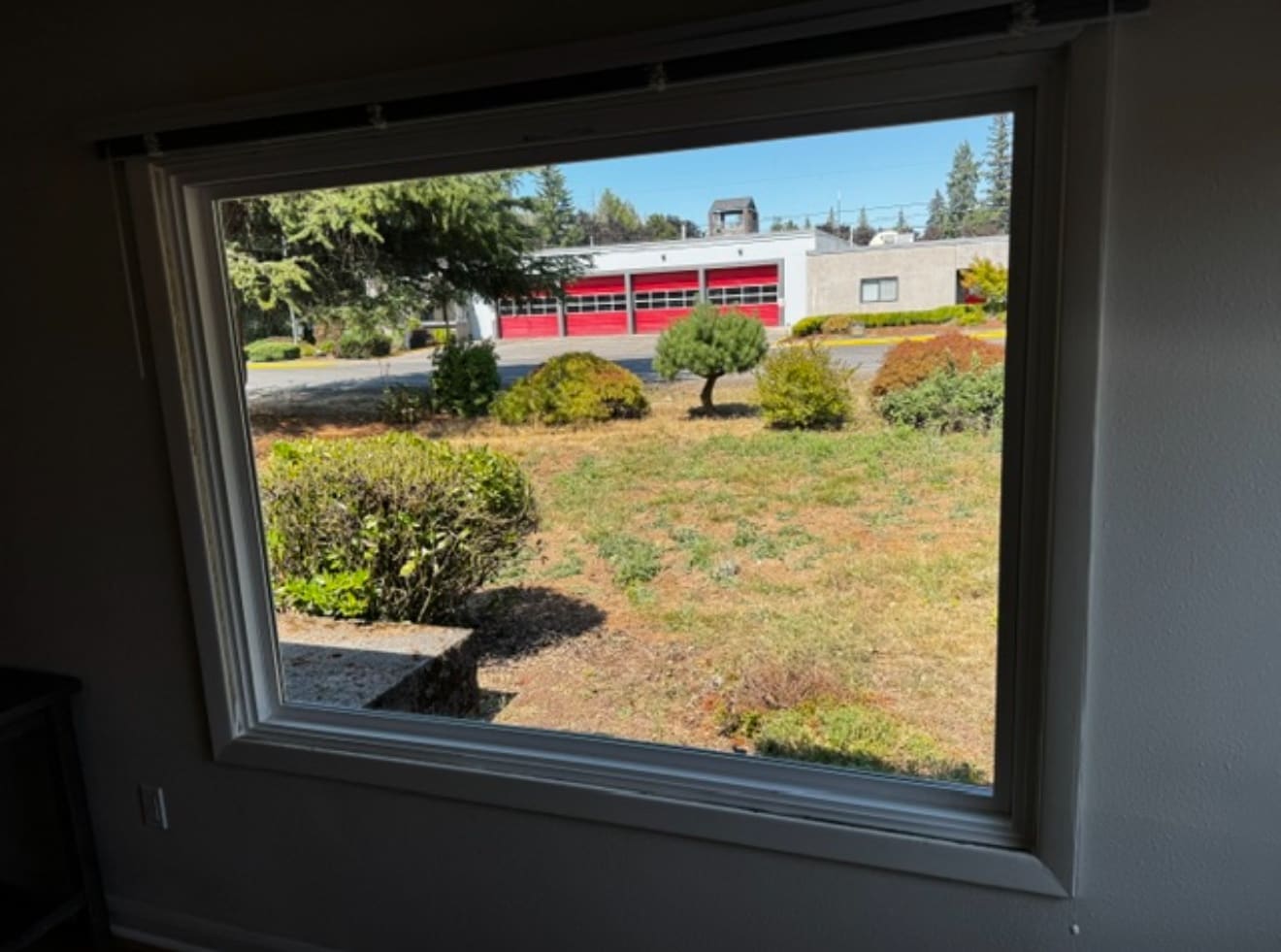
The thermal-crack detail and glass options are on our picture windows page.
7. Bay and bow windows
A bay or bow is not one window. It is three to six units joined at an angle and pushed out past the wall, with a seat below and a small roof above. A bay has a flat center and two angled sides and gives you a deep shelf from a narrow opening. A bow curves across a wider wall in a gentle arc. Both suit the living rooms of the mid-century ranches and older foursquares around Portland and Vancouver, and either works on a dining room or a stair landing.
What decides a bay job is not the glass, it is the framing above it and the two surfaces a flat window never has: the seat and the roof. The assembly hangs on support cables run into the header, the seat gets insulated so it is not an ice-cold bench in January, and the roof gets flashed like a roof. Our crews bring commercial window and flashing standards from Exteriors Design, the company behind Gorilla Works, which installs windows on mid-rise and high-rise buildings. We install bay and bow units in Milgard vinyl and fiberglass.
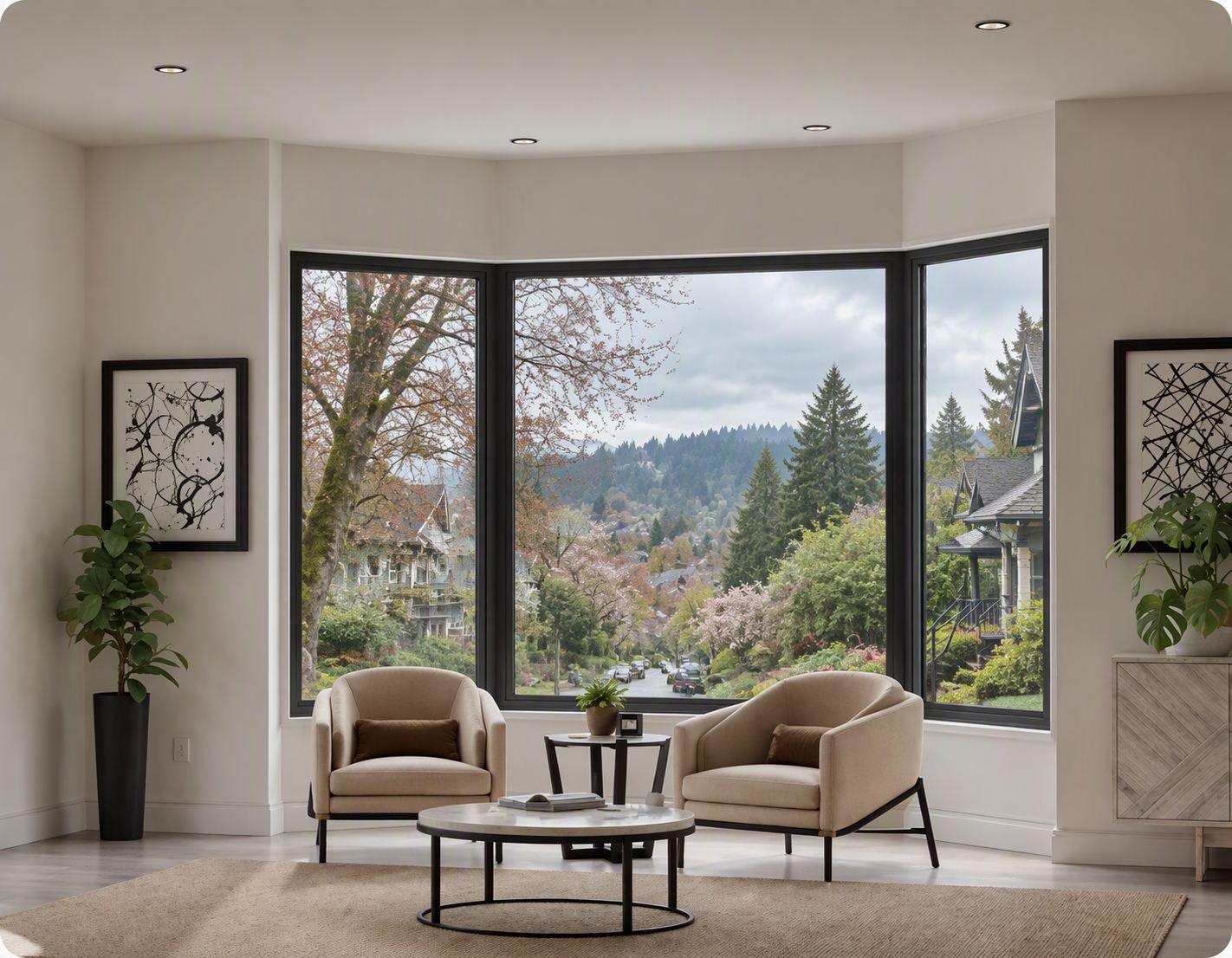
The support, insulation, and flashing details are on our bay and bow windows page.
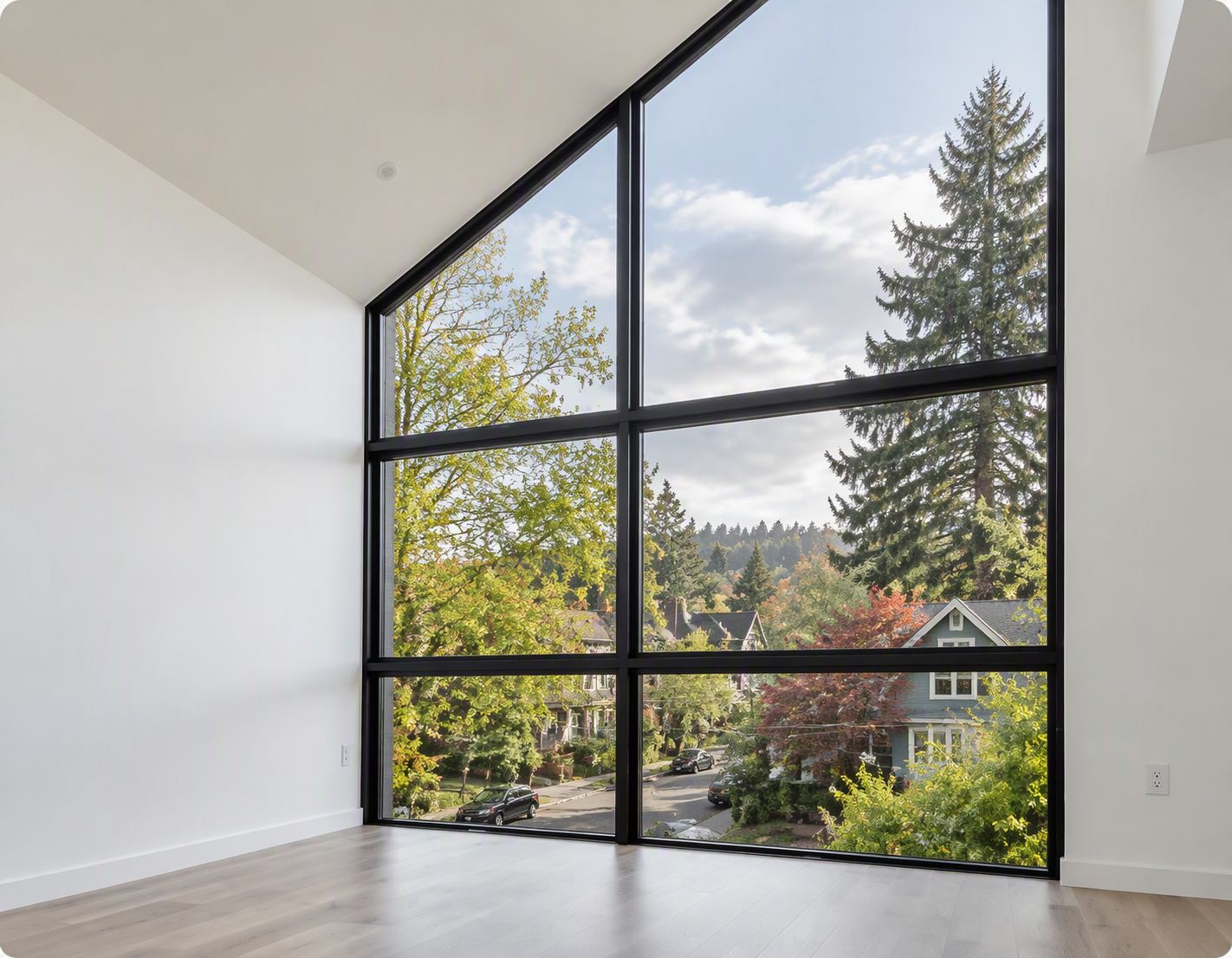
8. Specialty shapes
Round tops over a front door, half circles in a gable, triangles and trapezoids under a vaulted roofline, and small fixed squares on a stair. Most of these are fixed glass built to order, and they usually show up on one or two openings of a whole-house job rather than on their own. We measure and order them with the rest of the house so the frame color and sightlines match. They cannot serve as an escape window, so they never replace the operable unit a bedroom needs.
How we pick the style for each opening
Three rules do most of the work on a Portland house, and they are the ones the national lists skip.
- The rain rule. If you want air on a wet day, that opening gets an awning. Every other style gets closed when it rains, and a casement or a picture window is what seals tightest once it is shut.
- The bedroom rule. Oregon and Washington both use the residential code's escape-opening numbers: at least 5.7 square feet of clear opening, or 5.0 square feet at ground level, at least 24 inches tall and 20 inches wide, with the sill no higher than 44 inches off the floor. A casement meets it easily. A hung window needs a tall opening. A slider counts only its moving half. An awning or a picture window does not count at all.
- The swing rule. A casement or awning sash sticks out when open. Beside a deck, a walkway, a patio, or a tight side yard, that is a head-height hazard, so those openings get a slider or a hung window instead.
The fourth thing we check is the opening itself. About eight in ten of our window jobs are full-frame tear-outs rather than pocket inserts, because the sills and frames on 1940s to early-2000s houses here have usually taken on water. A full-frame job also gives you the freedom to change the style, since the new unit is built to the rough opening, not the old frame.
If you are weighing a style change that makes the opening bigger or smaller, read our window replacement permit guide for Portland first, because a resized opening is where a permit usually comes in.
What Portland homes actually get
Our job records track the series and the window count on each job, not the style of every opening, so we will not pretend to rank styles. What the records do show: nearly every job lands in the V250 Style Line or V300 Trinsic vinyl series, and most houses mix two or three styles. A few recent examples, by city and ZIP:
- Oregon City 97045, a 1972 home: seven V300 sliders in three sizes plus new exterior trim, October 2026.
- Portland 97230, a 1981 home: nine V300 windows and one sliding glass door, full tear-out with new trim, August 2026.
- Vancouver, WA 98685, a 1993 home: thirteen V250 windows, September 2026.
- Hillsboro 97124, a 2002 home: the whole house in V300 Trinsic with new white fiber cement trim, September 2026.
- Portland 97206, a 1942 home: four V250 windows, August 2026.
Casements and awnings show up as one or two units on a job, usually a bathroom or a kitchen, rather than a whole house. We also install bay and bow units and specialty shapes to order. Whichever styles you mix, keep them in one series and one color so the frame widths line up across the front of the house. The Trinsic frame is the narrowest, which is why people who want the most glass tend to land there.
For the price ranges we quote by series, see what window replacement costs in Portland. For the frame material decision, see our vinyl and fiberglass pages.
Get one written price with the style and series for every opening
Free in-home estimate across Portland, Vancouver, Gresham, Beaverton, and Oregon City. Up to a limited lifetime warranty on our install, and zero-down financing options for qualified homeowners. All financing is subject to credit approval.
OR CCB 198186 · WA L&I EXTERDC884PP · Family business since 2002
Old houses: two things that change the style choice
If your house is in one of Portland's historic or conservation districts, the city's historic resource rules only let you skip review when the new windows are wood, metal-clad wood, or in some cases fiberglass, set in the same opening with the glass recessed from the siding. Vinyl is not on that list, so a vinyl slider or double hung on a contributing house in Irvington or Laurelhurst normally needs historic resource review first. Check the address on the city's historic resource map before you fall for a style.
And any house built before 1978 may carry lead paint on the old sashes and trim. In Oregon, a contractor who disturbs it needs a separate lead-based paint renovation license from the Construction Contractors Board and has to work lead-safe. Ask to see it.
Our guide to replacing old wood windows in a historic Portland home walks through both.
Frequently asked questions
What are the four main types of windows?
If you had to pick four, they are hung windows (single or double), sliders, casements, and fixed picture windows. Awnings are a top-hinged cousin of the casement, and bay or bow units are assemblies built from the other styles.
Which type of replacement window is the most energy efficient?
A fixed picture window leaks the least air because nothing moves. Among windows that open, a casement or an awning seals tightest because the sash presses against the frame on all sides. Hung windows and sliders rely on brush seals along a track and let a bit more air through. The glass package still matters more than the style, which is why every window we order meets the 0.27 Oregon or 0.30 Washington U-factor code.
Which window style can stay open when it rains?
Only the awning, and only in a normal rain. The top hinge turns the open sash into a small roof over the gap. In a hard sideways storm, close it. It seals tighter than most styles once shut.
Which style works best for a bedroom escape window?
A casement, because almost the whole frame opens. A tall single or double hung can meet the rule too. A slider works only if its moving half is wide enough on its own, and an awning or picture window never counts.
Can I change the window style when I replace a window?
Yes. A full-frame replacement is built to the rough opening, so a slider can become a casement, or a hung window can become a picture window with an awning below it. Keeping the opening the same size usually needs no permit in Portland. Making it bigger or smaller does, and a bedroom still has to keep its escape opening.
Do different styles cost different amounts?
Yes, but the series, the size, and the glass package move the number more than the style does. We list every opening with its style and exact Milgard series on one written price, so you can see what each choice adds and compare it line by line against any other bid.
Sources
- Oregon Residential Specialty Code, Chapter 3, Section R310 emergency escape and rescue openings (5.7 sq ft, 5.0 sq ft at grade, 24 in by 20 in, 44 in sill)
- Oregon Residential Specialty Code, Chapter 11 energy efficiency, window U-factor 0.27
- Washington State Energy Code, residential, Table R402.1.1 fenestration U-factor 0.30
- Milgard, V250 Style Line Series windows and styles
- Milgard, V300 Trinsic Series windows and styles
- Milgard, V400 Tuscany Series double hung
- Milgard, C700 fiberglass series windows and styles
- City of Portland, Zoning Code 33.445 Historic Resource Protection Overlay Zone, window replacement exemptions
- City of Portland, residential window replacement permit guidance
- EPA, Renovation, Repair and Painting program for contractors (pre-1978 lead paint)
- Gorilla Works job records (Housecall Pro), 2026 window jobs by city and ZIP
Gorilla Works proudly serves Portland, Gresham, Beaverton, Hillsboro, Tigard, Lake Oswego, Happy Valley, Milwaukie, Troutdale, Vancouver WA, and Camas WA. Call (971) 343-4964 or request window installation.